
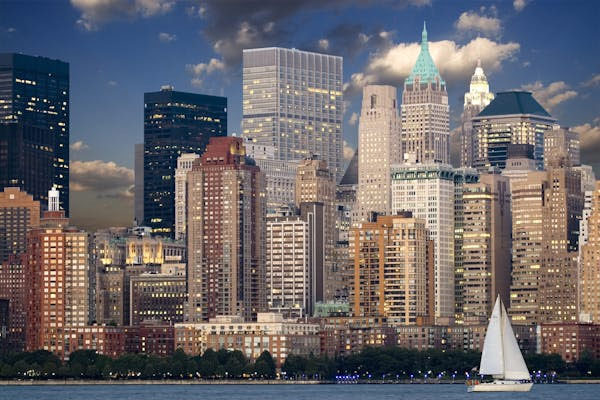
Manhattan is an island located at the center of New York City, surrounded by several important rivers. These rivers have significantly influenced Manhattan's history, transportation, and economy, playing a crucial role in shaping New York's iconic landscape. Here, we will describe the major rivers that surround Manhattan.
Hudson River
The Hudson River is the main river flowing west of Manhattan, forming the western boundary of New York City. This river is an important waterway connecting the northeastern United States and New York City, flowing from Canada through New York City to the Atlantic Ocean.
- Historical Significance: The Hudson River has been an important route for trade and commerce since colonial times. It played a significant role in the development of the early New York port and made important contributions to the American Industrial Revolution.
- Transportation and Tourism: Today, the Hudson River is a major site for both commercial transportation and tourism and recreation. Ferries and cruises operate along this river, and popular urban parks like the High Line are located near the river.
- Iconic Features: The view of the Hudson River from Manhattan offers an iconic perspective of New York City. Along with the Statue of Liberty, Battery Park, and the Empire State Building, the Hudson River is one of the elements that represent New York's landscape.
East River
The East River is a river flowing east of Manhattan, which is more akin to a strait than a river. The East River connects the Hudson River and Long Island Sound, serving as a boundary between Manhattan and Brooklyn, and Queens.
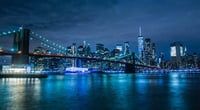
- Historical Significance: The East River has played an important role in New York City's port and trade. The Brooklyn Bridge, Queensboro Bridge, and Williamsburg Bridge cross this river, significantly contributing to transportation and industrial development.
- Transportation: Today, the East River is still utilized as an important waterway. There are ferry and community boat services, and several highways and rail lines also pass along the river.
- Iconic Landmarks: The Brooklyn Bridge, which spans the East River, is a representative historical monument of New York City and an important bridge connecting Manhattan and Brooklyn. Additionally, this river plays a significant role in creating the urban landscape near Times Square and Broadway.
These rivers have played a crucial role in making New York City a center of commerce and transportation, and they continue to be major thoroughfares today.
Moreover, these rivers shape the beautiful scenery of New York City, enriching the city's landscape and history.






 Weekend Movie Blog |
 Beauty, Health, Lifestyle Blog |
 coloradoman |
 Superman Cat Blog |
 novapixel |
  laro90 |
  MEDBIO American Doctor Blog |
  SWAT TEAM BLK |
  DREAM BIG |
  frostbite |
  330 Forever My Love |
  El Dorado |
  dralix58 |
  Gorama Round |
  Skydiving |
  dreamport |
  Yellow Snowman |
  Toaster Pizza Magic Show |
  velvetnom |
  Anytime Journey |
  Mrs. Duluth |
  jaxter |
  Atlanta Mama |
  Baguette Blog |
  Tan Sol |