

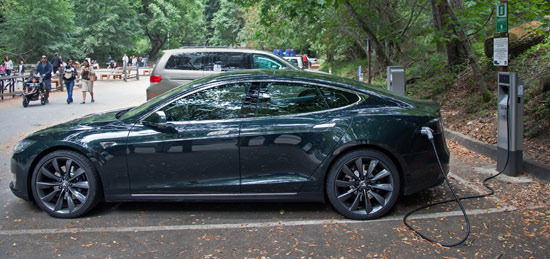
When choosing a car in Phoenix, I start with realistic calculations.
Here, the moment you open the car door in summer, it feels like a sauna, and with long distances, fuel and maintenance costs quickly become living expenses.
So, I was weighing whether to lease a hybrid or an electric vehicle, but the electric vehicle subsidy deadline is September 30. That's the day the federal electric vehicle tax credit ends. The benefits of up to $7,500 for new cars and up to $4,000 for used ones will disappear after that day, effectively causing car prices to "immediately increase" by that amount.
Media and authorities are warning in the same tone, so discussions about whether to sign a contract this month are serious.
I'm good with numbers, so I immediately grabbed my calculator. As of August, the average transaction price (ATP) for electric vehicles in the U.S. was about $57,245, so if you subtract $7,500, the perceived price drops by about 13%.
Conversely, after October 1, the same model will feel like it has increased by 13% in perceived value. The same goes for used cars. The average listing price for used EVs in August was about $34,704, so if you take away the $4,000 credit, the perceived price increases by about 11.5%.
This means that in a city like Phoenix, where you can't live without a car, the timing of your purchase becomes as crucial as rent. Most importantly, the cutoff on September 30 is not just a rumor but a clear deadline. The new and used EV tax credits will end that day, and even if you can't take delivery immediately, if you complete a "written binding contract" and pay a certain amount before September 30, you can still apply the benefits even after taking delivery, according to recent IRS guidance.
So, if the car is really popular and you have to wait, finalizing the contract and payment this month is essentially the only safety pin. However, the dealer must properly submit the "time of sale report," so you need to check the paperwork carefully, and the IRS energy credit online (ECOP) registration closes on September 30, so it's important to gather documents to avoid last-minute confusion.
Just looking around me, I can feel how this deadline casts a shadow on actual prices.
For example, based on an ATP of around $57,000, $7,500 is not just a matter of removing one or two options; it changes the entire monthly payment structure during a time of high interest rates. How much leasing and financing incentives will fill the credit gap varies by manufacturer, and these days, with battery raw material and tariff issues overlapping, some analysts predict that new EV prices could rise by thousands of dollars more.
Considering these variables, the accessibility of EVs in Phoenix is likely to decrease significantly after September 30. Of course, numbers aren't the only answer. Living in Phoenix, I tend to see the convenience of EVs quite positively. If you have a Level 2 charger installed at home, you reduce the need to stop at gas stations, and you can go straight indoors in the peak heat and turn on the air conditioning without worrying about emissions.
Moreover, local utility benefits like home charger rebates (around $250) provided by SRP or APS are still available, which can slightly offset installation costs. On the other hand, measures like exclusive use of HOV (carpool) lanes will also end on September 30, which could reduce commuting efficiency.
Ultimately, my conclusion is this: If you had even a slight plan to buy before September 30, finalize a written binding contract and deposit this month.
That's essentially the most realistic way to "lock in" $7,500 (or $4,000 for used). And make sure to ask the dealer for the time of sale report, and document whether the credit remains in case of delivery delays. Conversely, if you're still undecided, after October, a perceived price increase of around 10% will be the baseline, making the comparison of total cost of ownership (TCO) with hybrids and PHEVs much tighter.
I'm still contemplating until the last moment, but at least when I lay out the extreme heat and travel patterns in Phoenix, electricity rates, home solar availability, utility rebates, and the end of HOV lanes on one page, the decision-making becomes clearer. Talking about this makes me say, "I didn't expect the electric vehicle era to adjust its speed so quickly," but the most important thing is our wallets and daily lives.
My checklist is simple. Can I reach a breakeven point within three years through fuel and maintenance savings based on my driving patterns? Can I install home charging infrastructure without burden? Do I have the capacity to process contracts and paperwork without interruption this month? If the answer is 'yes' to all three, I will act before September 30. If there's even one 'no,' taking a pause with a hybrid is also a wise choice.
The market is always fluctuating, but once a contract is signed, it doesn't waver. Finally, I'll neatly note the data and schedule I referred to. The EV tax credit is confirmed to end on September 30, 2025, and IRS guidance states that if you have a "written binding contract + payment," it can be applied to vehicles delivered afterward.
The average transaction price for EVs in August was about $57,245, and the average listing price for used EVs was about $34,704, with some analyses warning of additional price risks due to tariff variables.
In the Phoenix area, while SRP and APS home charger rebates are still available, note that the EV-only HOV lane benefits are also set to end on the same day.







 fortbliss |
 Folding Instructions |
 yentra |
 Cali M Law Group |
 quanta7 |
 Kitchen Ideas |
 Toaster Pizza Magic Show |


 business lim |
  Finding Superfoods |
  lightyear |
  song bang |
  vexomo |
  Indiana Jones |
  meloncat |
  novapixel |
  mortrix |
  Esther 1983 |
  Moscow Kim |
  My Two Way |
  toastyfox |
  FLORIDA Acus |
  tracker |
  TONTON COFFEE |
  sunrise |
  ultron78 |
  uplifted |