

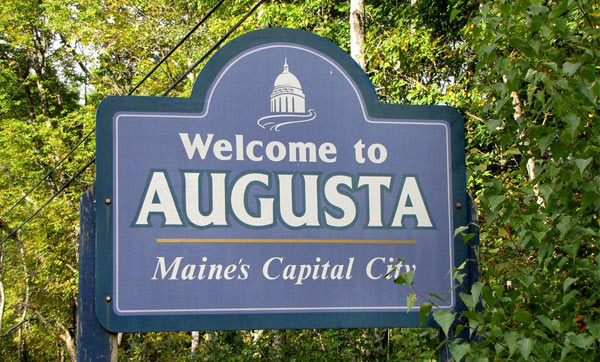
Augusta, the capital of Maine, was honestly a city I didn't have high expectations for until I planned my trip. It's neither a glamorous administrative center like Washington D.C. nor a vibrant port city like Portland. However, once I arrived, I found that this city held a heavy history within its quietude.
It felt like slowly flipping through an old book. Augusta is an old city established in 1628, initially starting as a trading outpost during the British colonial period. It was said to be a hub for merchants transporting timber and furs along the Kennebec River. As Maine gained independence in the 1800s, Augusta grew into a central city and was officially designated as the state capital in 1832. The reason was simple: it was geographically located in the center of Maine, making logistics easy via the river.
In fact, the Kennebec River flowing through Augusta is the city's history and lifeline. The timber and goods transported along the river during that time laid the foundation for Maine's industrial development, and even now, the river remains a symbolic presence in the city. I walked along the riverbank early in the morning, where mist rose over the water and gentle waves sparkled in the sunlight. It was a completely different atmosphere from the coastal city of Portland.
The static rhythm of the city centered around the river brought me peace. Augusta's economy is not large, but it is stable. With a population of just over 20,000, it is one of the smallest state capitals in the U.S. However, most of Maine's government agencies and public institutions are located here, ensuring its role as an administrative center. According to a friend, more than half of Augusta's jobs are in government or healthcare-related fields.
In fact, there are large hospitals like the MaineGeneral Medical Center on the outskirts of the city, and various state offices and department buildings are situated in the downtown area. While the scale of industry and commerce is not large, it also means that the economic structure is stable. It can be said that it is a city that is not sensitive to economic fluctuations like a big city, maintaining a quiet existence.
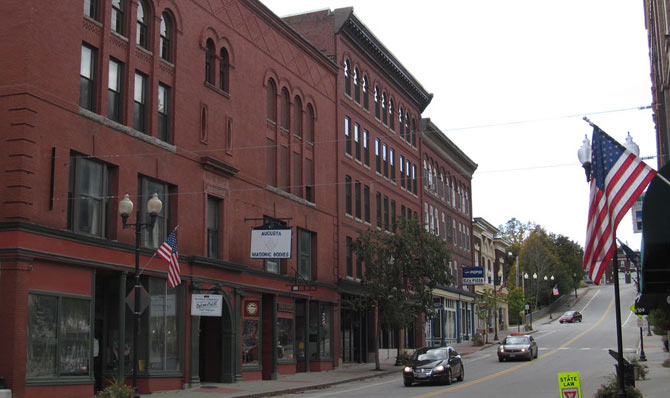
On the streets, there are more old local shops than chain stores. Cafes, small bookstores, and antique shops located on the first floor of brick buildings complete the city's atmosphere. These spaces exude the simple and warm charm unique to Maine.
For lunch that day, I had a lobster roll at a restaurant overlooking the Kennebec River, where the fresh sea scent was palpable. It was interesting that despite Augusta being an inland city, seafood is distributed throughout Maine, allowing me to enjoy the taste of the sea.
After my meal, I visited the Maine State House. From a distance, the golden dome is impressive, and up close, the neat beauty of the white marble architecture is felt. Inside, there are portraits of Maine's political history, and the hallways resonate with tranquility. Right next to the State House is the Maine State Museum, where one can see the industrial and social history of Maine at a glance. The exhibitions on the 19th-century timber and shipbuilding industries were particularly fascinating.
Seeing photos of workers holding saws and wood made me realize how much sweat has built the peaceful city we see today. Augusta may be small in scale, but the lives of its people are solid. Agriculture, public administration, and healthcare form the three pillars of the city, with tourism adding to the economy. In the nearby suburban areas, there are many small farms and local markets, creating a structure where residents trade with each other.
Perhaps that's why the expressions of the people here are relaxed. When I ordered coffee at a cafe, conversations like "Did you visit the river today?" flowed, making the city feel slow yet warm. In the evening, I returned to the riverbank, where the sky was painted orange and the waves gently swayed. The golden dome of the State House sparkled in the sunset light, catching my eye.
Augusta may not be glamorous as a travel destination, but it is a place where you can truly feel the 'heart of Maine.'







 milkyotter |
 cookiefox |
 US Regional Information Blog |

 US Embassy |
  Korean Mom |
  My NYC |
  moo moo |
  Mr Oh |
  forevergee |
  festival |
  manchester |
  constant |
  Leapfrog Move |
  vibranto |
  Tora Tora |
  yellowbutter |
  Dolly |
  NYC saladbar |
  Finding Superfoods |
  lightyear |
  song bang |
  vexomo |
  Indiana Jones |