
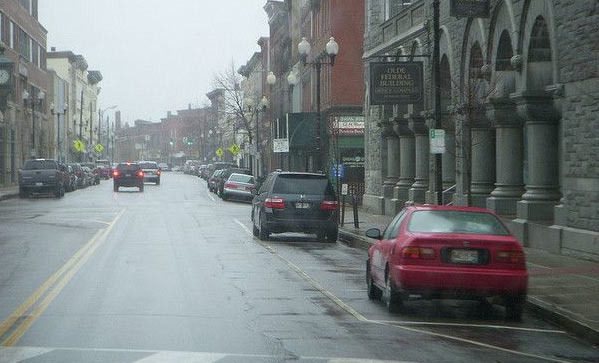
I had a long-overdue phone call with a friend living in Augusta. He has been working and living in Augusta for over 20 years and is now seriously considering retirement. Naturally, the conversation turned to the topic of "How is it living in Augusta?"
After hearing his story, it was clear that this city has distinct pros and cons. First, the advantages. Augusta is the capital of Maine, but it is not large, so the pace of life is slow and relaxed. My friend said, "The biggest advantage is that there is almost no traffic, and there is no commuting stress." You can reach anywhere in the city within 10 minutes, and the residential and commercial areas are concentrated, making daily life simple.
The natural environment is also really good. The Kennebec River, which runs through the city, is beautiful throughout the four seasons, and the riverside walking paths and bike lanes are well maintained. The air is clean, and walking by the river every morning has become part of his daily routine. In autumn, the foliage colors the entire city, and in winter, the snow-covered streets look like a scene from a movie. The second advantage is the cost of living. He mentioned, "It's much cheaper compared to Boston or New York."
Housing prices are relatively affordable, allowing for the purchase of a medium-sized home for under $300,000, and property taxes are at the average level for Maine, making it less burdensome. The cost of goods is also stable, and especially with the abundance of local produce and seafood, it is easy to save on food expenses. It is common to fill the dining table with fish caught by oneself. The medical infrastructure is also decent. Augusta has the MaineGeneral Medical Center, making it easy to receive emergency care or general treatment, and it is not difficult to access large hospitals in Portland.
Considering medical accessibility after retirement, this is quite an important advantage. The educational environment is stable, making it a good city for families with children. On the other hand, there are clear disadvantages. The first thing he mentioned was 'winter.' Winters in Augusta are long and cold. Snow often starts falling in November and can last until March, with temperatures dropping to minus 15 degrees. He laughed, saying, "The first few years felt romantic, but now shoveling snow is too hard." He mentioned that it feels like the day starts with snow removal, and he expressed a desire to move to a warmer place after retirement.
Another disadvantage is transportation and distance. Augusta is not a city with developed public transportation like Washington D.C. or New York. It is inconvenient to move without a car, and it takes about an hour and a half to get to the nearest large city, Portland. "To shop or enjoy cultural activities, you ultimately have to go to Portland. There are hardly any theaters, concert halls, or large supermarkets," he said. He also felt that there are few young people. The population is only about 20,000, and the average age is high, giving the city a somewhat quiet atmosphere. Most shops close before 8 PM, and there is hardly any bustling commercial area on weekends. While this quietness can be an advantage for retirees, it can also be a disadvantage for those who are prone to feeling lonely. Additionally, during winter, outdoor activities decrease, and some people report feeling depressed due to the low temperatures.
Economically, it is stable, but job opportunities are limited. He said, "There aren't many decent jobs outside of government, hospitals, and schools." As a result, most young people leave for Portland or Boston, and those who remain are mainly retirees or people with family ties. His words naturally brought to mind the urban structure of Augusta. A relaxed rhythm, a small population, and a tranquil landscape. It may not be a vibrant city, but it is peaceful and safe instead. The crime rate is low, and people's attitudes are friendly.
He mentioned that neighbors know each other's names and greet one another, preserving that old American feel. He emphasized, "It's really a nice city to live quietly after retirement." This is because there is no burden of housing costs, good access to hospitals, and beautiful natural surroundings. However, he jokingly added that there are times when he wants to escape to Florida if shoveling snow becomes too difficult.
Augusta may feel somewhat stifling in youth, but it is one of the best cities in the later stages of life. It is an ideal place for those who want to slow down the pace of life and live in harmony with nature.








 milkyotter |
 cookiefox |
 US Regional Information Blog |
 U.S. Weather Bureau News |
 Korean Mom |
  My NYC |
  moo moo |
  Mr Oh |
  forevergee |
  festival |
  manchester |
  constant |
  Leapfrog Move |
  vibranto |
  Tora Tora |
  yellowbutter |
  Dolly |
  US Embassy |
  NYC saladbar |
  Finding Superfoods |
  lightyear |
  song bang |
  vexomo |
  Indiana Jones |