
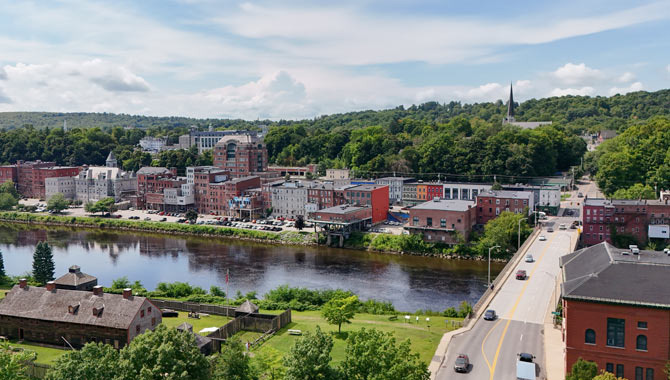
Augusta, the capital of Maine, is a city where you can feel the daily lives of the people of Maine in the quietly flowing passage of time rather than a flashy tourist destination.
The neat streets and historic buildings unique to New England, along with the calm scenery flowing along the Kennebec River, leave a subtle yet profound impression on travelers.
What I felt during my visit to Augusta this time was that this place is not just an 'administrative center' but a city that retains the 'true essence of Maine.' The first impression of Augusta was its tranquility.
Unlike cities like Boston or Portland, there are no high-rise buildings in the downtown area; instead, old brick buildings and small shops line both sides of the street. The Kennebec River, which runs through the heart of the city, flows gently like the city's breath, with white bridges connecting across it.
As I walked while watching the river's reflection in the morning sunlight, my mind naturally relaxed. The first place I visited was the Maine State House.
The golden eagle sculpture atop the dome was impressive, and the white marble exterior showcased the dignity of an old building. Passing through the entrance and entering the interior, a serene atmosphere unique to the state house enveloped me, with portraits of figures related to Maine's history hanging in the hallways.

If you follow the free tour, you can see the meeting room and part of the governor's office, which interestingly retains the traditional design of northeastern state capitals in the U.S.
Directly across from the state house is the Blaine House, the official residence of the Governor of Maine. Although you can only view the exterior as the governor currently resides there, the neat garden and white building were quite impressive.
A little outside the city center is the Maine State Museum. This museum, themed around Maine's industry, culture, and the lives of its people, is a must-visit for anyone interested in Maine's history. The exhibition showcasing the growth of the lumber and shipbuilding industries in the 1800s was particularly fascinating.
There are displays of large wooden saws and handcrafted boat models, as well as a space that recreates the lives of Maine workers at that time. I could naturally understand why Maine is called the 'Pine Tree State' and how it grew around fishing and shipbuilding.
In the afternoon, I walked along the Kennebec River Trail, which runs along the riverbank. This trail is a walking path that stretches from downtown Augusta to the northern Houlton area, where you can often see people biking or jogging. The wildflowers blooming by the river, the sounds of birds, and the green of the distant forest create a space where you can enjoy nature even within the city. There is a small observation deck along the trail where you can see boats flowing along the river and the cityscape at a glance.
The expressions of the people I encountered in Augusta during my travels were also impressive. Most of the people I met in cafes, bookstores, and parks were relaxed and friendly. When I ordered a cup of coffee, they would always ask, "Where are you visiting from?" and I could feel their genuine interest even in short conversations. The warm and simple sentiment unique to Maine was alive in this small city.
In the evening, I had dinner at a local restaurant in downtown. The menu included lobster rolls, clam chowder, and blueberry pie. Maine is also famous for its blueberries, so the blueberry pie served for dessert was perfectly sweet and tangy. Sitting by the restaurant window, looking at the river as I wrapped up my day, the city lights reflected softly on the water.
As a tourist destination, Augusta may not be flashy, but its simplicity hides its true charm. The unhurried leisure and the natural balance between nature and the city are the greatest gifts Augusta has to offer.






 milkyotter |
 cookiefox |
 New England |
 Tonky |
  viroma |
  cookie |
  Live and that's it |
  Alright Twain |
  eatontown blog |
  HAWAII Korean Church News |
  Amore |
  linex |
  Balancework |
  laro90 |
  MEDBIO American Doctor Blog |
  SWAT TEAM BLK |
  DREAM BIG |
  frostbite |
  330 Forever My Love |
  El Dorado |
  dralix58 |
  Gorama Round |
  Skydiving |