

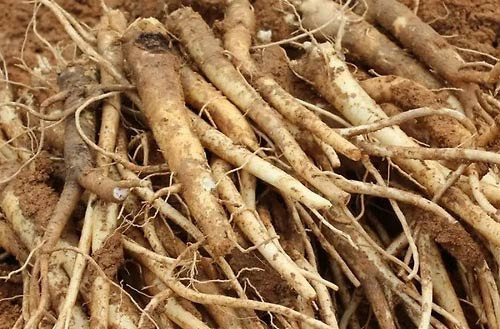
When you try the herbal remedy Yonggaksan, known for its benefits to the bronchial system, you can immediately recognize its unique aroma.
It turns out that the flavor comes from bellflower. In short, it feels like nature's ingredients have been concentrated into a medicine.
When used alone, bellflower works slowly, but when combined with other ingredients, it provides immediate relief for the throat.
This is likely why older generations have said that bellflower is good for the bronchial system.
However, this isn't just a case of "it's been used for ages, so it must be good"; it's due to a component called saponin found in bellflower.
This is the same group of compounds found in ginseng, but bellflower has a unique property that specifically affects the bronchial system.
The most noticeable effect is on phlegm. When you catch a cold or have bronchial issues, mucus tends to become sticky.
This mucus clings to the throat, causing persistent coughing and making it hard to breathe.
Eating bellflower helps thin this mucus, making it easier to expel.
That's why people say, "I feel like my phlegm is loosening up after eating bellflower."
Additionally, it protects the bronchial mucosa. When you have a cold or are exposed to high levels of fine dust, your throat can feel sore and irritated.
This indicates that the mucosa is weakened. In such cases, even minor irritations can trigger coughing.
Bellflower acts like a coating, providing a protective layer inside. That's why drinking bellflower tea can make your throat feel more comfortable.
It also has anti-inflammatory properties. In fact, most bronchial discomfort is due to inflammation. Bellflower helps suppress this inflammatory response.
Another benefit is that it reduces the frequency of coughing. When the throat becomes sensitive, even trivial things can trigger a cough.
Cold air or dust can provoke an immediate reaction. Bellflower helps calm this hypersensitivity.
As a result, you may feel like the number of coughs decreases.
However, it's important to clarify one thing: bellflower is not a medicine.
It is a bronchial supplement, not a treatment. If there is a bacterial infection or if the issue has progressed to the lungs, this will not resolve the problem.
That falls into the realm of needing a doctor's visit. Bellflower is best viewed as a helpful remedy in the early stages of a cold or during recovery.
Using it is not difficult. The most common way is through bellflower tea. Adding a bit of honey can reduce throat irritation and make it much easier to consume.
If it tastes too bitter, that indicates a high saponin content. If it's too strong, you can adjust it with pear juice or honey.
Bellflower is a natural supplement that helps relieve phlegm and reduce bronchial irritation, making breathing easier.
So, understanding that people seek it out in the early stages of a cold or when their throat is sensitive can be helpful in the future.



 US Legal Consultation on Trials |
 Study Abroad Life Know-How Tips |
 Best Frozen Yogurt |
 Mr Cleveland |
 solvix18 |
 ansdal |
 fantastic |

 Northeastern |
 Why Not Me |
  Plastic Rose |
  Rice Shop Uncle BLOG |
  Victory 1988 |
  Gook Rule |
  Rowland Mama |
  Coco and Lulu |
  Baguette Blog |
  washington mom |
  yorvik12 |
  HVAC will prosper |
  mortrix |
  Panorama Kstar |
  MAX009 BLOG |
  K-POP TV News |
  My Beloved Hometown Hwagae Market |
  Tart Tart |
  Min's blog |
  Tora Tora |
  pixel77 |