

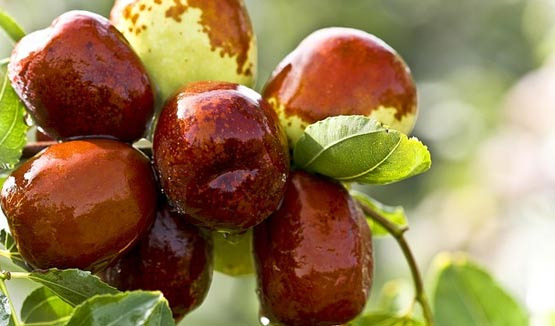
These days, I am deeply fascinated by the 'date palm'. The official name of this fruit, which can be easily found in American grocery stores and Costco, is Medjool Date.
At first glance, it looks like a wrinkled dried plum, but when you take a bite, its chewy and sweet texture melts like caramel.
Interestingly, this date is different from what is commonly referred to as 'jujube' in Korea, and it feels similar yet different from the dates eaten in Iran.
Examining how this single fruit is perceived, consumed, and utilized differently across cultures reveals quite fascinating stories.
Iran is one of the world's leading producers of date palms. Thanks to its hot and dry climate, dates have been cherished as a food resource in southern Iran for thousands of years.
In Iran, dates are regarded as more than just a simple snack. During Ramadan, they are the first food consumed after breaking the fast, as they quickly restore blood sugar levels.
Moreover, what is most important is that there are many varieties of dates in Iran.
Deglet Noor, Mazafati, Piarom, Zahedi, and so on — each variety has its own unique sweetness, texture, and moisture content.
In particular, Mazafati is relatively moist and soft, with a taste that melts in your mouth like honey. Iranians enjoy this date with tea, or they eat it as a healthy snack stuffed with almonds or walnuts.
They even use it to add sweetness to dishes instead of sugar, making it a fruit that is truly part of life.
In contrast, dates in the USA are perceived more as a 'healthy snack' or 'superfood'.
The Medjool Date sold in bulk at Costco is often consumed for energy replenishment after workouts and is frequently used as a sugar substitute in vegan baking. In the USA, it is trendy to eat dates not just raw, but also stuffed with peanut butter or wrapped in dark chocolate as a dessert. Some people even add them to smoothies for a natural sweetness.
Personally, I enjoy freezing dates in my refrigerator and taking out one or two to eat chilled.
Their chewiness and sweetness are just as satisfying as a spoonful of ice cream. Most importantly, they are a guilt-free dessert since they contain no added sugar.
The Korean jujube we are familiar with is closer to 'jujube' than to dates. Unlike the moist dates in the USA that can be eaten raw, Korean jujubes are mostly dried and often brewed into tea or used as herbal medicine.
In the past, elders would brew warm jujube tea for those with cold bodies, and jujubes are an essential ingredient in traditional holiday foods like yakgwa and hangwa. They are also sometimes placed on rice cakes or used as a garnish in steamed dishes. Although they are less sweet, their unique deep aroma and firm texture make a distinct presence.
Looking at it this way, the word date connects to national identity in Iran, symbolizes wellness trends in the USA, and represents tradition and health as a medicinal ingredient in Korea. Although they are the same fruit or similar fruits, their uses vary greatly depending on who handles them.
In fact, when I first encountered the 'date palm', I thought, "Is this really a date?" but now I find it even more interesting that the dates of the three countries hold meaningful places in their respective lives. We often think that 'the same fruit must taste the same', but within it lies the deep layers of land, time, and culture.
Perhaps that's why, these days, even when I eat a date, I feel like I am embarking on a journey.
The feeling of walking in the deserts of Iran, peeking into the refrigerator of an American health blogger, and being enveloped in the subtle scent of herbal medicine in a Korean herbal shop.







 Moscow Kim |
 Seattle - Emerald City |
 self-evaluation |
 Sandiego Auntie |
 Karina's Blog |
 Enjoyable American Life Diary |
 Utah, the Most Livable State |
 morvex37 |

 manchester |
  constant |
  Leapfrog Move |
  vibranto |
  Tora Tora |
  yellowbutter |
  Dolly |
  US Embassy |
  NYC saladbar |
  Finding Superfoods |
  lightyear |
  song bang |
  vexomo |
  Indiana Jones |
  meloncat |
  novapixel |
  mortrix |
  Esther 1983 |
  fortbliss |