

Honda, which seemed like an indestructible company in the motorcycle and automotive industry, has reported a significant loss for the first time.
It is noteworthy that this is the first loss since its listing on the Tokyo Stock Exchange in 1957.
The net loss for the fiscal year ending in 2026 is approximately 423.9 billion yen, a stark contrast to the over 800 billion yen profit from the previous year.
Operating profit has also turned negative. While the loss is substantial, it is more a shock from strategic adjustments than a decline in performance.
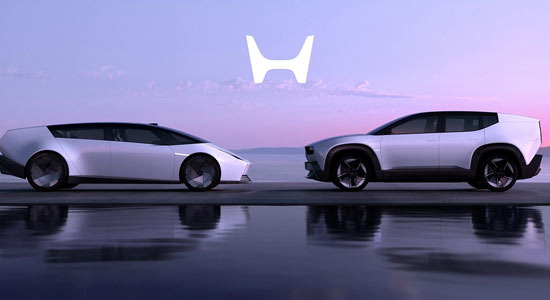
The core issue lies with electric vehicles. Honda had aggressively invested in EV transitions for a while, but demand in the U.S. market did not meet expectations.
In fact, the growth of electric vehicles in the U.S. is slowing, and consumers are increasingly turning back to hybrids due to concerns over charging infrastructure and pricing.
Honda quickly recognized this trend and decided to halt some EV projects decisively.
The problem is the costs incurred during this process. The losses from halting development have been reflected at a scale of 2.5 trillion yen, significantly impacting performance.
Additionally, external factors are also challenging. Changes in U.S. policies have reduced electric vehicle subsidies and increased tariff burdens.
In the Chinese market, local companies like BYD are rapidly advancing in both price and technology, diminishing the standing of Japanese firms.
The global automotive market is being shaken in multiple directions at once.
However, it is difficult to say that Honda has structurally collapsed.
Internal combustion and hybrid vehicles still hold competitive advantages, and particularly in the North American market, hybrid demand is showing signs of revival.
The motorcycle business and financial sector are also generating stable profits.
This loss is more a result of a significant cost adjustment due to a change in direction rather than a weakening of the company's fundamentals.
The lesson from Honda's case is how quickly one can recognize and correct a perceived misdirection.
While the trend indicates that electric vehicles are the future, not every timing is correct. If the market does not follow, technology cannot become a business.
Honda has chosen to absorb losses and change its strategy. While it may seem like a failure based on the numbers, it is a choice made to prevent larger losses.
In business, making the "right choice now" is more important than making the "right choice eventually."
The larger the investment, the greater the cost of delaying judgment. Another key factor is flexibility.
Having a structure that can adjust according to circumstances rather than going all-in on one direction ultimately determines survival.
Other Japanese companies are facing similar situations. Toyota has forecast a decline in profits, and Nissan has entered restructuring. The entire automotive industry is entering a transitional phase.
Ultimately, Honda's loss is more a result of choices rather than a failure.
It is better to quickly turn back rather than continue down a wrong path, even at the cost of losses.
 DdoliSquad
 Redwolf
 Eagle5thYr







 coloradoman |
 pintos |
 moname |
 mapsina |
 Mr. Largo |
 Good Karma |
 Yahoo LALA |
 Conflite Teacher |
 Choco Choco Star |
 Silent Sea |
  West Kong |
  Franco Family |
  lumora |
  Valley Bang |
  pravix22 |
  Cohesive Kong |
  werehere |
  problemo |
  galaxy88 |
  breezelove |
  Minnesota Sonata N |
  hazelnut |
  Korean News American Blog |
  AH LALA |
  Savion |
  Good Good |