
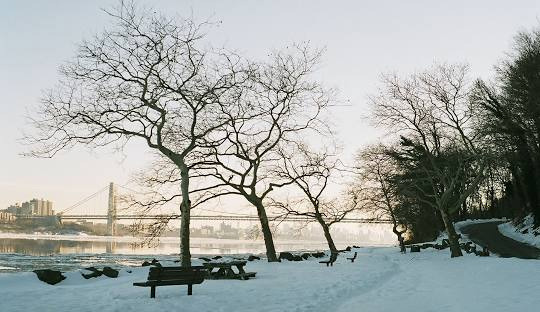
A small town located in Bergen County, New Jersey, Palisades Park.
Today, it is known as one of the most Korean towns near New York, but its beginnings were quite different.
Over the course of more than a century, how dramatic of a change has this small borough undergone?
By examining the flow of history, one can naturally understand why Palisades Park is so special today.
March 22, 1899 – A City is Born
Palisades Park was established as an independent borough on March 22, 1899, separating from Ridgefield Township.
The name of the area is derived from the Palisades Cliffs, a cliff formation along the Hudson River, which remains a symbol of the region today.
The early settlers were primarily European immigrants. At that time, it was a typical suburban area composed mainly of farmland and single-family homes.
Since the 1980s – The Emergence of the Korean Community
Everything changed after the 1980s. With the revision of U.S. immigration laws, the influx of Korean immigrants increased, and Palisades Park began to gain attention as a relatively affordable area close to New York.
Initially, it started with a few families, but as word spread and relatives and friends moved in one by one, a small 'Korean Town' emerged, growing into the Korean-centered city it is today.
2020, The Current State
As of 2020, the total population is approximately 20,292. Among them, over 60% are Asian, with Koreans making up the majority.
Looking at the entire state of New Jersey, Palisades Park is one of the cities with the highest concentration of Koreans. It is truly a place where one can spend a day speaking Korean without discomfort. The streets are lined with restaurants serving gamjatang, supermarkets are stocked with gochujang and perilla leaves, and most churches have signs in Korean.
Economic Structure – Korean Businesses Lead the City
The median household income in the city is around $70,000 to $80,000 (as of 2020).
While it is not a high-income area, it has a stable economic structure based on small businesses.
Notably, the Korean-centered commercial district stands out. Thanks to this, it remains a popular city for early immigrants to settle, and it serves as a 'Korean food recharge station' that visitors from Korea must stop by during their travels in the U.S.
Distance to New York – Daily Life Within Commuting Range
It is about a 20 to 30-minute drive to Manhattan. Public transportation is also accessible, so many people with jobs in New York reside here. A city that combines urban accessibility with community closeness is rare in New Jersey.
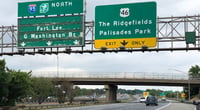
Main roads I-95 and Route 46 run through the city, and bus routes to Manhattan are densely operated. Thus, it is a neighborhood where 'commuting to New York and enjoying samgyeopsal after work in Palisades Park' is possible.
Palisades Park is not just a neighborhood with many Koreans. It is also a multicultural city where various races, including whites, Hispanics, and Chinese, live together. However, within this diversity, the Korean community plays a leading role in forming a unique cultural identity.
Palisades Park is not simply a "neighborhood with many Korean restaurants."
This place is a space where the 'epic of immigrants' unfolds, transforming from a quiet suburban town established by European immigrants in 1899 to a center of the Korean community in the 2020s.
Although the city is small, the history, culture, and identity it holds are by no means small.
And the true charm of it is... only those who have lived there know it.



 squidogame |
 Margarine Daebimama |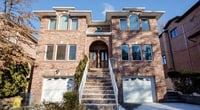
 eatontown blog |
 Ishiyoung Forever 208 |
 cloudyday |
  laro90 |
  MEDBIO American Doctor Blog |
  SWAT TEAM BLK |
  DREAM BIG |
  frostbite |
  330 Forever My Love |
  El Dorado |
  dralix58 |
  Gorama Round |
  Skydiving |
  dreamport |
  Yellow Snowman |
  Toaster Pizza Magic Show |
  velvetnom |
  Anytime Journey |
  Mrs. Duluth |
  jaxter |
  Atlanta Mama |
  Baguette Blog |
  Tan Sol |