
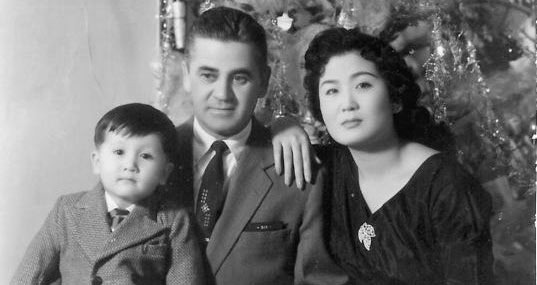
Dr. Ji-Yeon Yuh's interview is a valuable study that deeply explores the history of Asian war brides, including the Korean War, U.S. immigration law, and societal perceptions.
Below is a summary of the interview content organized by key themes:
War Brides Act and Exclusion of Asian Women
-
War Brides Act (1945): A law that allowed U.S. soldiers who married European women after World War II to bring their wives to the United States.
-
However, this law did not include Asian women (from Korea, Japan, Vietnam, etc.).
-
U.S. soldiers stationed in Europe could bring their wives, but those stationed in Asia faced discrimination.
1947: Introduction of Exception Clause
-
The U.S. Congress temporarily allowed exceptions for soldiers stationed in Japan.
-
Korean women were exceptionally allowed to enter during the 'visa exception period'.
1952 Immigration Law Amendment
-
In 1952, the law that completely banned Asian immigration was repealed.
-
Subsequently, Asian women were also allowed to immigrate as spouses of U.S. soldiers.
'War Bride' vs. 'Military Bride'
-
A 'war bride' is a woman who entered the U.S. under the 'War Brides Act'.
-
However, most Asian women entered through other means (exceptions, immigration law), so Dr. Yuh uses the term 'Military Bride'.
-
There are about 100,000 Korean military brides.
Chain Migration Effects and Community Formation
-
Military brides played a role in connecting immigration by inviting family (siblings, parents, relatives) after settling in the U.S.
-
Especially after the 1965 immigration law amendment, family reunification became active.
-
Many military brides also help new immigrants settle and take on community leadership roles.
Prejudices and Stereotypes in American Society
-
Asian military brides = former sex workers, marriages for financial gain are stereotypes that exist.
-
Combined with the prostitution industry around Camp Town, the perception that 'everyone must have been like that' spread.
-
Dr. Yuh introduces in her actual interview that some women were victims of forced prostitution, and there were cases involved in human trafficking.
Causes of High Divorce Rates
-
Some studies show that the divorce rate among military brides reaches 80%.
-
Main causes:
-
Marrying at a young age
-
Cultural and language barriers
-
Lack of ability of U.S. soldiers to maintain families
-
Discrepancy between men's expectations and reality
-
Women who were capable in Korea may appear powerless in the U.S. due to language and institutional barriers
-
Inability to Return Home and Staying in the U.S.
-
Few women return to Korea after divorce. Reasons include:
-
Family opposition to marriage → cut off from family
-
Stigma in Korean society against women who divorced foreign husbands
-
Lack of employment and remarriage opportunities
-
Interview:
"The Story of the First 'Korean War Bride' Lee Yong Soon" Q1: How did you two meet?
Blue: "I got to know him in the same work department. My colleagues started calling me 'Blue' after seeing my blue sweater."
What process did you go through to get married?
In 1950, when North Korean troops occupied Seoul, Blue said she walked barefoot to Busan to find her husband. The marriage permit took over 5 months due to military and immigration procedures.
What was the reaction when you returned to the U.S.?
In November 1951, when the couple arrived in Seattle, the citizens of Seattle warmly welcomed them with a band performance. The city government gifted Blue a $100 savings bond. It is said that Johnie's mother hugged her in tears, saying, "I'm so glad you came."
Scale of Korean War Brides
There is a distinction between GI brides and military brides.
Asian women who married U.S. soldiers are referred to as 'military brides' rather than 'war brides', with over 100,000 Korean women reportedly entering the U.S. since the 1950s.







 squidogame |
 Margarine Daebimama |
 eatontown blog |
 cloudyday |
  Google Idea |
  Korean Mom |
  My NYC |
  moo moo |
  Mr Oh |
  forevergee |
  festival |
  manchester |
  constant |
  Leapfrog Move |
  vibranto |
  Tora Tora |
  yellowbutter |
  Dolly |
  US Embassy |
  NYC saladbar |
  Finding Superfoods |
  lightyear |
  song bang |
  vexomo |
  Indiana Jones |