
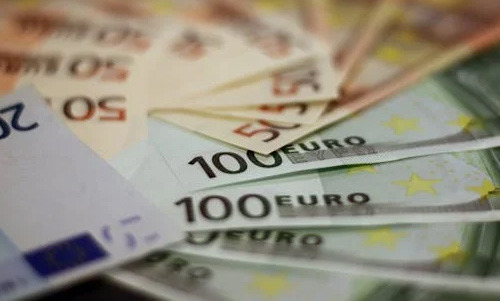
The weakness of the Euro is the result of a combination of various economic, financial, and political factors.
The slowdown in the European economy is a significant factor contributing to the weakness of the Euro.
- Decline in GDP Growth Rate: If the economic growth rate of European Union (EU) member countries slows down or falls into recession, investors may lose confidence in the Euro.
- Decrease in Industrial Production: A weakening of manufacturing and service sector indicators will lead to a reduction in demand for the Euro in the foreign exchange market.
- Energy Crisis: In a situation where Europe relies on energy imports, rising energy prices can lead to increased production costs and reduced consumption, which can suppress economic growth.
Interest Rate Gap
- European Central Bank (ECB) Interest Rate Policy:
If the ECB slows down the pace of interest rate hikes or considers cuts compared to central banks in major economies (e.g., the U.S. Federal Reserve), the Euro is likely to weaken.- The interest rate differential is a major reason that causes investors to move funds to other currencies (e.g., the U.S. dollar) that offer higher yields.
- U.S. Interest Rate Hikes:
Due to interest rate hikes in the U.S., the dollar may strengthen, while the Euro may show relative weakness.
Inflation
- High Inflation:
If the inflation rate in Europe continues to rise, consumer purchasing power decreases, and the real value of the Euro declines. - Lack of Policy Response:
If the ECB does not quickly implement appropriate interest rate policies to curb inflation, confidence in the Euro will weaken.
Political Instability
- Conflicts Among Member States:
Political and economic differences among countries within the EU, especially conflicts related to fiscal policy or regulation, can lead to Euro weakness.- For example, the financial issues of Southern European countries are always a factor that exacerbates market instability.
- Geopolitical Risks:
Geopolitical crises such as the Russia-Ukraine war directly impact the European economy and lead to Euro weakness.
Energy Dependence and Price Shocks
- Energy Crisis:
Europe has a high dependence on energy imports from external countries like Russia.- If energy prices rise or supply becomes unstable, it can lead to increased production costs and economic slowdown, resulting in Euro weakness.
- Weakening Export Competitiveness:
High energy costs can weaken the competitiveness of European companies, affecting the value of the Euro.
Increased Capital Outflow
- Decline in Investor Confidence:
As uncertainty in the European economy increases, investors move their funds to more stable or profitable regions. - Strength of the U.S. Dollar:
During global economic instability, investors prefer the U.S. dollar, considered a safe asset, leading to further weakness of the Euro.
Limitations of Monetary Policy
- Limited Effectiveness of ECB's Monetary Policy:
Since the Eurozone is a monetary union of several countries, monetary policy may not be effectively applied to all member states.- Some countries may avoid aggressive policies due to concerns about economic slowdown, even when interest rate hikes are necessary.
Trade Deficit
- Deterioration of Eurozone Trade Balance:
If imports exceed exports, leading to an increase in trade deficits, demand for the Euro will decrease.
The weakness of the Euro is the result of a combination of various factors, including economic growth slowdown, interest rate differentials, inflation, energy crises, and political instability.







 Weekend Movie Blog |
 Beauty, Health, Lifestyle Blog |

 coloradoman |
 Superman Cat Blog |
 novapixel |
  Korean Mom |
  My NYC |
  moo moo |
  Mr Oh |
  forevergee |
  festival |
  manchester |
  constant |
  Leapfrog Move |
  vibranto |
  Tora Tora |
  yellowbutter |
  Dolly |
  US Embassy |
  NYC saladbar |
  Finding Superfoods |
  lightyear |
  song bang |
  vexomo |
  Indiana Jones |