

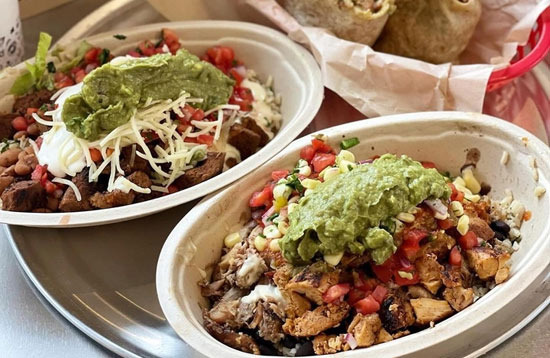
In America, Chipotle has established itself as a brand that has accurately captured the flow of an era, rather than just suddenly becoming popular.
Now it feels so common that it seems like there's one in every neighborhood, like a Mexican fast food joint, but in the early days of Chipotle, it was quite a strange presence in the American dining market. It wasn't a hamburger, nor fried chicken, and it wasn't a traditional Mexican restaurant either; it occupied an ambiguous position. However, that ambiguity coincided perfectly with the changes in American society.
The biggest reason for the rise of Chipotle Mexican Grill is timing. It was a period when perceptions of fast food in America were gradually changing. The era where it was enough to be cheap and fast was shifting to a time when people began to want to know what they were eating.
Terms like organic, antibiotic-free meat, and sustainable agriculture were starting to enter everyday life, and Chipotle boldly displayed that on their menu. They kept sending the message that while they are fast food, they do not use just any ingredients.
Another factor is the choice. When you go to Chipotle to order, there's always the same flow. Whether to include rice, whether to have a burrito or a bowl, what kind of meat to choose, whether to have black beans or pinto beans, what salsa to add. This may seem like a simple ordering process, but it's quite an important point for Americans.
The feeling of choosing, the illusion of having combined it to my taste is strong. Even though you are actually receiving predetermined ingredients in a set order, consumers feel like they have created 'their own meal.' This is a different experience compared to just a hamburger set.
The pricing was also just right. It's more expensive than McDonald's, but cheaper than a sit-down Mexican restaurant.
Thus, Chipotle naturally dominated the lunch market. It's perfect for office workers who want something light for lunch but don't want something too cheap, and don't want to spend a long time at a restaurant. Especially in places like California and Colorado, where many people are health-conscious and pay attention to their diet, carrying a Chipotle bowl gives the impression of being someone who takes care of themselves.
Cultural elements are significant too. America is a country where Mexican food is already deeply integrated into daily life. Tacos, burritos, and salsas are not at all unfamiliar. However, Chipotle packaged that in a very sophisticated American way.
It's Mexican but not too Mexican, it doesn't feel like immigrant food, and it has the essence of an 'American brand.' Therefore, it works well in both conservative areas and progressive cities.
Of course, there were crises. When the food poisoning incident occurred, it really felt like it was the end. Stock prices fell, and the brand image was significantly shaken. Yet, the fact that they survived is proof that Chipotle is indeed a successful brand.
American consumers do not easily abandon brands they have formed an attachment to. Especially if it's a brand they consume as part of their lifestyle, it's even more so. Chipotle was not just a restaurant; it was intertwined with the image of being someone who doesn't eat thoughtlessly.
Now, it doesn't feel as innovative as it once did. It has grown too large and become too familiar. However, it is a clear fact that Chipotle has succeeded in America, and that success is not just due to taste, but a result of the zeitgeist, consumer psychology, and changes in food culture coming together.
In America, Chipotle is not just a Mexican fast food; it is a case that shows how far fast food can evolve. So if you ask whether it has succeeded, I think the answer has been clear for a long time.





 El Dorado |
 lightyear |
 Moscow Kim |
 coloradoman |
 Montgomery Mom |
 liquid asset |
 luido |

 Tennis City |
 Belgray Miscellany |
  Tonky |
  viroma |
  cookie |
  Live and that's it |
  Alright Twain |
  eatontown blog |
  HAWAII Korean Church News |
  Amore |
  linex |
  Balancework |
  laro90 |
  MEDBIO American Doctor Blog |
  SWAT TEAM BLK |
  DREAM BIG |
  frostbite |
  330 Forever My Love |
  dralix58 |
  Gorama Round |
  Skydiving |