

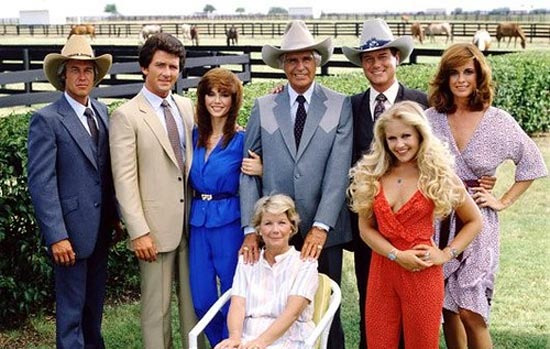
There was a TV drama that engraved the name 'Dallas' into American pop culture, which is the long-running American TV drama Dallas that aired from 1978 to 1991 for a remarkable 14 years.
This drama encapsulated the level of power struggles, romance, conspiracies, and betrayals that could be called a soap opera at the time, focusing on the family scandals of the Texas oil tycoon Ewing family. In particular, the character J.R. Ewing was the epitome of an 'evil yet charming character,' possessing a strange allure that made viewers both hate and become captivated by him.
J.R. Ewing was not just a simple villain; the key was that he was an evil yet charming character. His sly smile, smooth accent, and ability to manipulate others made viewers angry yet drawn in.
The popularity was so strong that more people started wearing J.R.-style hats, and some even copied his hairstyle.
It also changed the perception of how a villain could be loved, greatly influencing the emergence of complex villains in later American dramas. It would not be an exaggeration to say that J.R. is the ancestor of the charming villain characters we see today.
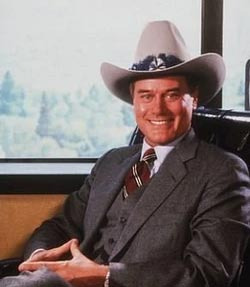
The most famous scene is the mystery of "Who shot J.R.?"
In the season finale, J.R. gets shot, leading viewers around the world to speculate on the culprit while waiting for the next season, resulting in the absurd phenomenon where news about J.R. was more talked about than news from the American stock market, illustrating just how immense the show's popularity was at the time.
Interestingly, the Dallas drama was not just a mere soap opera but also influenced the cultural image of the American South and Texas's economy. With oil, cowboy boots, mansions, large ranches, elegant parties, and fierce battles, this drama created a fantasy of the 'money-dominated Texas aristocratic world.'
In fact, the Southfork Ranch, which served as the backdrop for the drama, became a tourist attraction after the show aired and continues to attract many visitors today.
It has become a destination not only for American tourists but also for international visitors, transforming into a cultural space where internal tours, weddings, and event rentals are possible. Moreover, it was this ranch's symbolism that cemented Texas's image as a city of oil wealth worldwide.
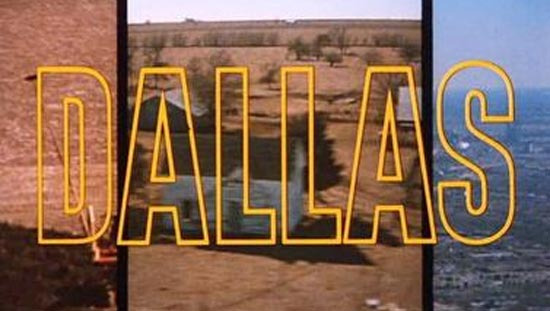
It was also quite popular in South Korea. Even in an era when foreign dramas were not easily accessible through platforms like Netflix or YouTube, this work strangely penetrated into Korean households in the 1980s. At that time, Korean TV had quite limited foreign drama broadcasts, focusing mainly on family dramas and historical dramas, but Dallas provided fresh content showcasing 'strange luxury and scandalous drama' in between.
As soon as the Texas oil tycoon family appeared, Korean viewers were wide-eyed, following the ultra-luxurious mansions, absurdly large ranches, and the endless incidents of the wealthy. The "world of fighting with money and betraying with love" was so unfamiliar yet entertaining, something rarely seen in Korean dramas.
During that time, Korea was in a period of economic growth, and society was enjoying both the strange imagination of 'Is that how the rich live?' and the moral judgment of 'That's wrong!' Dallas was the perfect drama to stimulate those feelings.
Even more interesting is that Dallas subtly influenced the early sentiments of Korean melodramas. Stories of chaebols, family feuds, infidelity, conspiracies, and bombshell scandals are common now, but they were not easy to find back then, and viewers experienced a new structure through such foreign dramas. Later, as domestic dramas began to flood with chaebol stories, the narrative structure similar to Dallas naturally became familiar.
In 2012, a reboot season aired, serving as a sequel to the original series, featuring past characters alongside a new generation, once again stirring nostalgia among fans. Although it did not achieve the explosive popularity of the past, for original fans, the return of J.R. and the Ewing family's story held great significance, allowing the name Dallas to be mentioned once again across generations.
'Dallas' is not just a drama; it is a work that strongly imprinted the region of Texas into global pop culture and established itself as a pioneer of soap operas.
Behind the grand image of the oil kingdom that comes to mind when thinking of Texas, the intense symbolism created by this drama still remains.






 Egg Steamed Pot |
 novapixel |
 xylora |
 vegas mom |
 Coco and Lulu |
 Aura-Infused WACAM |
 wendra |

 There Are Such Things in the World |
  Korean Mom |
  My NYC |
  moo moo |
  Mr Oh |
  forevergee |
  festival |
  manchester |
  constant |
  Leapfrog Move |
  vibranto |
  Tora Tora |
  yellowbutter |
  Dolly |
  US Embassy |
  NYC saladbar |
  Finding Superfoods |
  lightyear |
  song bang |
  vexomo |
  Indiana Jones |