

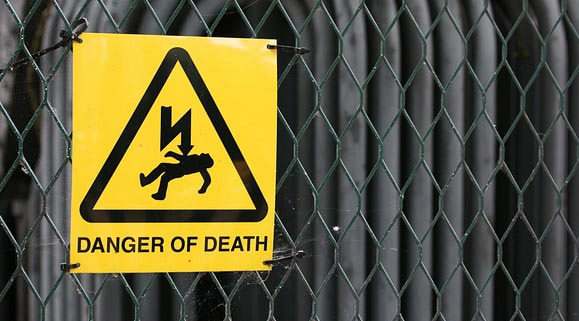
It was last Friday. I was standing next to the truck ramp in front of the warehouse, checking the list of items to be sent to the East. That day, the invoice and the number of boxes just wouldn't match, and I was getting frustrated in the blazing sun. Suddenly, the warehouse of a Hispanic furniture company across the street became chaotic. A few employees rushed out to the road and it was clear they were calling 911. Something had clearly happened.
Later, I heard that a new worker was working on wall paneling with a metal ladder. However, the ladder touched an exposed high-voltage line that was open due to construction, and he was electrocuted right there. People said he "bounced" and fell to the ground. The electricity surged through him, causing his body to jerk.
The ambulance arrived faster than expected. It seemed to take less than 10 minutes. But for those at the scene, that 10 minutes must have felt like an hour. The paramedics put an oxygen mask on him and carefully laid him on a stretcher to take him away... Fortunately, he was still breathing and was conscious, but his condition was critical.
People often say, "American electricity is 110, so it's bearable even if you get electrocuted, right?" But that's only true for the electricity used at home.
Commercial facilities like factories or warehouses are different. 220 volts is standard, and they even use 277 volts and 480 volts. This is usually referred to as 'three-phase power,' and this level of electricity is no joke. If an accident happens, it's just over. It's not just an electrocution; it's a fatal accident.
The manager of the Hispanic furniture company's warehouse seemed stressed because he had to report to OSHA since the worker was taken to the hospital due to electrocution. If he didn't report it, the fine would exceed ten thousand dollars, so it was necessary. And if a serious industrial accident occurs, OSHA must come to the scene.
In fact, when I first started working in a warehouse after coming to the U.S., I didn't know this. But the company kept asking for various documents, saying you need a license to operate a forklift, and you have to wear a harness when using a ladder... At first, I thought, "Why is this so complicated?"
Later, I found out that the agency overseeing and managing all of this is OSHA. The Occupational Safety and Health Administration, a federal government agency created to prevent American workers from getting injured or killed on the job.
Based on the OSHA Act, it has been supervising countless work environments in factories, warehouses, construction sites, and even hospitals for decades.
Looking back now, the electrocution accidents in warehouses, the falls at construction sites, and the burns from hot oil in restaurant kitchens... all these are incidents that OSHA regulations aim to prevent. Nowadays, whenever something new is installed or a new employee is hired, I automatically think, "Does this meet OSHA standards?"
Honestly, it can be a hassle. But on days like today, I realize how important those standards are.
OSHA isn't just there for show. The reason this country can function with thousands of people working in dangerous environments every day is that these regulations provide a minimum level of safety.
And ultimately, it's up to us to adhere to them. If someone gets hurt because we didn't follow the rules, it becomes not just an 'inconvenience' but a 'responsibility.'
So today, I sit in the forklift driver's seat and make sure to buckle my seatbelt first.



 Weekend Movie Blog |
 Beauty, Health, Lifestyle Blog |
 coloradoman |
 Superman Cat Blog |
 Noodle Noodle |
  Tonky |
  viroma |
  cookie |
  Live and that's it |
  Alright Twain |
  eatontown blog |
  HAWAII Korean Church News |
  Amore |
  linex |
  Balancework |
  laro90 |
  MEDBIO American Doctor Blog |
  SWAT TEAM BLK |
  DREAM BIG |
  frostbite |
  330 Forever My Love |
  El Dorado |
  dralix58 |
  Gorama Round |
  Skydiving |