

I work at a hospital in Arlington, Texas.
Since a hospital is a place where things are hectic every day, I naturally notice what the staff eats.
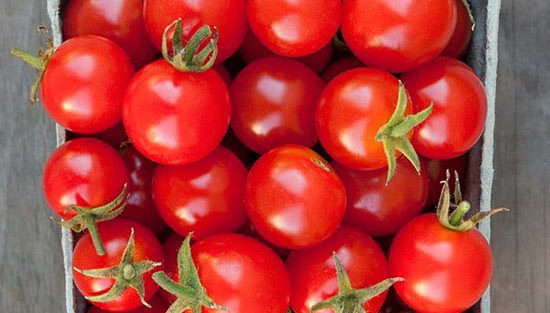
Among them, Jessica, who works in accounting next to me, brings a Ziploc bag full of cherry tomatoes every day. And whenever she feels bored throughout the day, she pops one in her mouth.
At first, I just thought it was whatever. But since she does it every day, I started to get curious. One time, I asked her.
"How many do you eat in a day since you eat them every day?" She replied that it's about 30.
When I asked her why, her answer was simple. "It's good for my gut." After hearing that, I was curious if it was true, so I did a little research.
To cut to the chase, she wasn't wrong.
Cherry tomatoes are beneficial for gut health. While the effects aren't immediate like medicine, consistently eating them can definitely help stabilize gut conditions.
The first reason is dietary fiber.
Cherry tomatoes contain both soluble and insoluble dietary fiber. Insoluble fiber stimulates the intestines to promote smooth bowel movements, while soluble fiber serves as food for beneficial gut bacteria, improving the microbial environment. They are particularly good for people with hard stools or irregular bowel movements. There was a reason Jessica chews on them every day.
The second reason is their water content.
Cherry tomatoes are mostly made up of water. This helps soften the contents of the intestines. When water and fiber work together, intestinal movement is naturally activated. This is why they are good for preventing constipation. Working in a hospital, there are times when I don't have enough time to drink water, so eating cherry tomatoes as a snack is a reasonable choice for hydration.
The third reason is their antioxidant properties.
Cherry tomatoes are rich in lycopene and vitamin C. These components help reduce inflammation in the intestinal lining and maintain a stable gut environment. They can have a positive effect on people who are sensitive or frequently feel bloated. Many people react first in their gut when stressed at the hospital, making this particularly relevant for them.
They are also good for gut balance.
Fiber and plant nutrients promote beneficial bacteria while creating an environment that suppresses the excessive growth of harmful bacteria. Gut health doesn't improve dramatically from eating a specific food; it requires consistent consumption of such foods to gradually improve. This is why Jessica eats them every day, not just occasionally.
However, there are some precautions. Eating too many at once can cause discomfort due to their acidity. It's advised that people with sensitive stomachs or reflux avoid eating them on an empty stomach. The recommended amount is about 10 to 15 a day, but since Jessica eats 30, that might be a bit much. She says she has no issues at her weight of about 150 pounds, so it seems to be a matter of individual tolerance.
The advantage of cherry tomatoes is that they help gradually improve gut health without irritation when eaten daily. They assist intestinal movement with water and fiber, provide food for beneficial bacteria, and reduce inflammation in the intestinal lining. While you may not feel a significant change immediately, the more you eat them consistently, the more comfortable your gut will become.
At first, I thought Jessica bringing tomatoes every day was just one of those health trends among Americans.
But I found out it was a habit backed by evidence. Instead of buying expensive health supplements or probiotics, consistently eating a few cherry tomatoes daily might be more practical.
Our bodies tend to respond longer to these small habits rather than strong stimuli.
So, I've started bringing a Ziploc bag of tomatoes like Jessica.
While tomatoes have many health benefits, I can't eat 30, so I'm sticking to about 15 a day.
Have I noticed any changes? I just feel a moderate sense of fullness, which has reduced my snacking.







 neroyo |
 nivex85 |
 Old English |
 nixxon |
 LIZ Legal Information Blog |
 August Snowman |
 US 210 Kim Sangsa |
 Mental Health Psychiatrist |
 Gupabal MissKorea |
 Texas Migration Story |
  Tora Tora |
  yellowbutter |
  Dolly |
  US Embassy |
  NYC saladbar |
  Finding Superfoods |
  lightyear |
  song bang |
  vexomo |
  Indiana Jones |
  meloncat |
  novapixel |
  mortrix |
  Esther 1983 |
  fortbliss |
  Moscow Kim |
  My Two Way |
  toastyfox |
  FLORIDA Acus |
  tracker |