

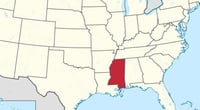
The Mississippi River and the state of Mississippi have historically maintained a close economic relationship. This relationship has significantly impacted the state's economic development and the formation of important transportation and logistics networks. The Mississippi River has played a vital role in the economic growth and development of Mississippi, transcending mere physical boundaries.
Since the late 18th century, the Mississippi River has functioned as a central transportation route for the economy of Mississippi. At that time, the river was used as a trade route and transportation corridor, playing a crucial role in the transport of cotton, agricultural products, and timber. Trade occurred along the river with Europe, the eastern United States, and South America.
Agriculture-centered economy: The economy of Mississippi was primarily based on cotton and sugar agriculture, and these products were distributed via the river. The Mississippi River served as an important export route for the state's economy, facilitating the transport of not only agricultural products but also meat, grains, and various other goods.
Navigation and transportation: The early 19th century saw the advent of steamboats, enabling large-scale transportation along the river. This allowed the Mississippi River to grow into a key hub for logistics and transportation, becoming the center of major commercial activities.
The Civil War (1861-1865) sparked fierce military conflicts centered around the Mississippi River. The river became an important front line between the Confederacy and the Union, with control of the river granting economic advantages to the occupying side.
- The military significance of the river: During the war, the side that controlled the Mississippi River could gain significant economic and military advantages, making battles over the river crucial. After the war, the economy of Mississippi suffered greatly, but trade via the river continued to play an important role.
In the early 20th century, with industrialization and the development of other transportation methods like railroads, the importance of the Mississippi River somewhat diminished, yet it remained a vital trade route. Cargo transport via the river continued to make significant contributions to the economy of Mississippi.
- Cargo transport: The Mississippi River remained an important route for transporting various industrial products such as coal, steel, and chemicals. Large cargo ships navigated the river, becoming a crucial method for exporting industrial production from the Midwest and South of the United States through the Mississippi River.
Today, the Mississippi River still plays a significant role in the economy of Mississippi. The river continues to serve as a major corridor for logistics and transportation, generating economic value across various industries, including ports, cargo transport, and tourism.
Ports and logistics: The ports along the Mississippi River are important hubs for cargo transport within the United States, playing a crucial role in logistics between the state and the nation. Ports and waterways have developed along the Mississippi River, with one of the state's major industries being export and import.
Tourism: The area around the Mississippi River has also seen the development of tourism. The historical sites and natural scenery around the river attract many tourists, significantly impacting the state's economy.
The economic relationship between the Mississippi River and the state of Mississippi has historically played a very important role. The river has been a center for transportation and trade, contributing to the growth of the state's economy across various fields, including agriculture, industrialization, logistics, and tourism. Even today, the Mississippi River remains a key axis for logistics and transportation, continuing to have a significant impact on the economy of Mississippi.
The term 'Mississippi' used to measure time in the United States
The expression "1 Mississippi, 2 Mississippi, 3 Mississippi" is primarily used as a way to measure time.
This expression originated as an informal method of timing in the United States, derived from pronouncing 'Mississippi' when counting one number.
In "1 Mississippi," the word "Mississippi" is used to signify an average time of 1 second for pronouncing the word. This method serves as a natural way to count to 1 second, commonly used to sensibly measure the passage of time.
The exact origin of this expression is unclear, but it is speculated that it became widely used as a way to measure time because the Mississippi River was a well-known geographical feature in the United States.







 frostingline |
 Certified Authentication Blog Page |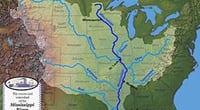
 Deep South Mississippi |
 Good World Good Thoughts |
  DREAM BIG |
  frostbite |
  330 Forever My Love |
  El Dorado |
  dralix58 |
  Gorama Round |
  Skydiving |
  dreamport |
  Yellow Snowman |
  Toaster Pizza Magic Show |
  velvetnom |
  Anytime Journey |
  Mrs. Duluth |
  jaxter |
  Atlanta Mama |
  Baguette Blog |
  Tan Sol |
  US Embassy |
  Korean Mom |
  My NYC |