

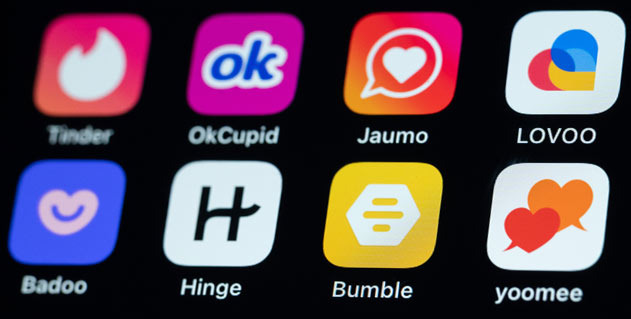
Nowadays, dating apps used by countless people from their teens to their 50s have become a platform that has changed social culture as a whole.
In fact, the concept of internet dating dates back to 1995, when Match.com started advertising daily.
At that time, meeting someone online was considered awkward, but as many people found new connections through this service, online dating began to establish itself as a culture.
Then in 2009, the location-based gay dating app Grindr was released, which was another innovation. It was the first time GPS-based matching services were introduced, which are now taken for granted. The idea of connecting directly with someone nearby rather than just chatting based on profiles became the foundation for many apps that followed.
In 2012, a game changer that completely split the history of dating apps emerged: Tinder. The 'swipe' feature, known to everyone today, originated here. The simple method of swiping right if you like a photo and left if you don't was highly addictive and attracted a global youth audience.
Before Tinder, dating apps were seen as platforms for awkward or serious meetings, but after Tinder, a culture of "starting casually and leading to meetings" emerged. This simple UX fundamentally changed the way humans meet.
In 2013, a year later, Hinge appeared. Interestingly, Hinge adopted the slogan "designed to be deleted."
In other words, the goal was not to keep users on the app for a long time, but to meet someone quickly and delete the app.
This differentiation strategy received a great response from those who felt fatigued by the 'light swipe culture' and has now established itself as an app sought after by people considering serious relationships or marriage.
Then in 2014, there was another turning point: the birth of Bumble.
This app, created by Whitney Wolfe Herd after resigning from Tinder, introduced the rule that "women can make the first move."
It may seem simple, but it provided a fresh shock to the existing dating culture. Previously, it was taken for granted that men would approach first, but Bumble quickly grew as a 'feminist dating app' that respects women's initiative.
Today, Bumble has expanded beyond simple dating to include features for finding friends (BFF) and networking (Bizz), establishing itself as a comprehensive social platform.
Finally, in 2019, even Facebook entered this market. Facebook Dating is that service. In fact, Facebook already had billions of users, giving it tremendous potential competitiveness.
However, it has not yet generated the same public response as independent apps like Tinder and Bumble, but it is gradually expanding its territory with the differentiation of "connecting with people you already know."
As we can see from this historical overview, dating apps are no longer just a trend but a social phenomenon that has evolved over time. Initially starting as simple online matching services, they have become increasingly diverse and segmented with changes in technology and culture.
Today, dating apps have become platforms used daily by hundreds of millions of people worldwide, and especially during the COVID-19 pandemic, they became an essential communication channel for people when offline meetings were restricted.
It has become an era where not only young people but also middle-aged and even elderly individuals are finding new connections through dating apps.
For today's people, dating apps have transcended being just a space to find romantic partners; they have become a new starting point for human relationships and a cultural experience. Traditional methods of meeting, such as blind dates, meetings, and marriage agencies, still exist, but these apps provide faster and broader options than all of them.
Especially with the continuous advancement of technologies like location-based matching, AI recommendations, and interest-based connections, future dating apps will blend even more naturally into our daily lives.
Ultimately, the journey that began with Match.com in 1995 continues to evolve as of 2025, and dating apps have now established themselves as a "universal" tool rather than a "selective" one.
In this world, we can meet new people with just a few touches on our smartphones.





 Baguette Blog |
 Khan Film Blog Production |
 dermoon |
 hoosierdaddy |
 sun walker |
 newyorker 101 |
 Things to Do to Buy a House |
 U.S. Weather Bureau News |
 International Court |
 Lunch and Dinner Mexican Taco |
  Atlanta Mama |
  US Embassy |
  Korean Mom |
  My NYC |
  moo moo |
  Mr Oh |
  forevergee |
  festival |
  manchester |
  constant |
  Leapfrog Move |
  vibranto |
  Tora Tora |
  yellowbutter |
  Dolly |
  NYC saladbar |
  Finding Superfoods |
  lightyear |
  song bang |