
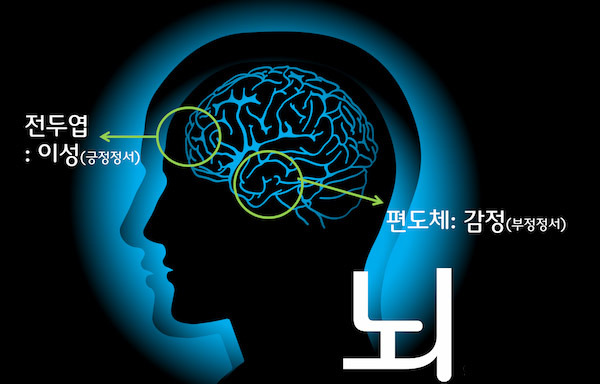
The frontal lobe is the area located at the front of the brain, just behind the forehead, and it plays a very important role in thinking.
It is not just about thinking; it plays a key role in planning, making decisions, and regulating emotions.
Setting personal goals like deciding to accomplish a certain amount of work today is a function of the frontal lobe, and being able to endure when someone makes you feel bad is also thanks to the control of the frontal lobe. Additionally, coming up with creative ideas or finding new ways to solve problems is possible when this area is actively functioning.
Interestingly, the reason why judgment becomes clouded and impulsive when intoxicated is that the inhibitory function of the frontal lobe weakens.
Thus, the frontal lobe is referred to as the place responsible for humanity. When this area is healthy, we can act wisely in society, regulate our emotions, and plan for the future. However, if you feel a tightness around the frontal lobe while concentrating on work, it can be explained by various causes.
The brain does not have pain receptors, but around the frontal lobe, there are blood vessels, muscles, and nerves, so tension or changes in this area can manifest as feelings of headache or pressure.
First, excessive tension during concentration can be a cause. When focused on important tasks, one may unconsciously furrow their forehead or tense their shoulders and neck, and if this tension persists for a long time, it can transmit pressure to the front of the frontal lobe.
Second, changes in blood flow play a role. When concentrating, the frontal lobe is responsible for decision-making, attention, and planning, leading to increased energy consumption in the brain. During this process, blood flow is directed to the frontal lobe, and as the demand for oxygen and glucose increases, temporary tightness or heaviness can occur.
Third, eye fatigue is an important factor. Prolonged staring at a monitor without blinking can cause tension in the muscles around the eyes, and this tension can lead to feelings of pressure in the forehead and frontal lobe area. Especially when focusing on close objects for a long time, visual fatigue can feel like a headache.
Fourth, lack of sleep or stress can also be background factors. The frontal lobe is an area that responds sensitively to sleep and stress, so when fatigue accumulates, even small concentration activities can quickly feel overwhelming.
If this phenomenon is temporary and improves with rest or stretching, there is no major problem.
However, if tightness occurs frequently or is accompanied by symptoms such as headaches, dizziness, or blurred vision, it is advisable to visit a hospital promptly for specialized treatment.








 Weekend Movie Blog |
 Beauty, Health, Lifestyle Blog |
 coloradoman |
 Superman Cat Blog |
 novapixel |
  Tonky |
  viroma |
  cookie |
  Live and that's it |
  Alright Twain |
  eatontown blog |
  HAWAII Korean Church News |
  Amore |
  linex |
  Balancework |
  laro90 |
  MEDBIO American Doctor Blog |
  SWAT TEAM BLK |
  DREAM BIG |
  frostbite |
  330 Forever My Love |
  El Dorado |
  dralix58 |
  Gorama Round |
  Skydiving |