

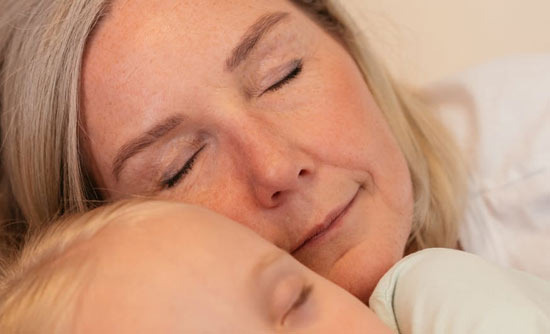
There has been ongoing discussion that as we age, napping may not just be a simple rest but a signal from our bodies.
A study published in April 2026 tracked napping patterns over a long period among older adults with an average age of about 81.
The results indicate that it's not just about whether one naps, but when, how long, and how often one naps that are connected to health status.
The study analyzed data from over 1,300 adults over approximately 19 years.
It's notable that this was not just a simple survey; actual napping patterns were measured using wearable devices.
Because it was based on real behavioral data, the reliability is considered to be higher.
The findings showed that those who napped after waking up in the morning, or those who napped frequently and for long durations, had a higher overall mortality rate.
The key point here is that it's not napping itself that is bad, but rather an "excessive napping pattern."
A short nap can actually help with fatigue recovery and improve concentration. The problem arises when it becomes repetitive and prolonged.
Excessive napping is likely not just a habit but could be linked to neurodegenerative diseases, cardiovascular diseases, and chronic illnesses.
In simple terms, it may signal that the body is unable to maintain energy levels normally.
This could be due to not getting enough sleep at night, disrupted circadian rhythms, or the possibility of an existing illness.
In fact, as people age, sleep patterns often become disrupted. Nighttime sleep becomes lighter, and frequent awakenings occur, leading to a pattern of trying to compensate with daytime naps.
However, if this pattern repeats, it can lead to a vicious cycle. More daytime napping can lead to more nighttime awakenings, and disrupted nighttime sleep can cause increased daytime drowsiness, throwing off the entire daily rhythm.
An interesting aspect of this study is its potential as a "predictive tool."
It's not just that having many naps is dangerous, but tracking napping patterns could help detect health issues early.
With the recent proliferation of smartwatches and wearable devices, collecting such data has become realistically possible.
In the past, one would have to go to a hospital for tests, but now it's possible to check these things in daily life.
Of course, this study also has its limitations. As the researchers emphasized, it shows correlation, not causation.
In other words, it doesn't mean that increased napping leads to higher mortality rates; rather, it likely indicates that those who are already unhealthy tend to nap more.
Therefore, it cannot be concluded that one must simply reduce napping. The important thing is to observe changes in patterns.
If there is a sudden increase in napping, a change in timing, or an increase in frequency, it may be necessary to check one's health status.
Ultimately, as we age, our bodies send signals in various ways. Changes in basic patterns such as appetite, sleep, and activity levels are the moments when these signals are sent.
Napping is one of those signals. It's important not to dismiss it with the thought, "It's just because I'm getting older," but to view it as an indicator.
Especially if there are family members or people around, it's important to pay attention to these changes.
Nowadays, we live in an era where health is managed by numbers. Steps taken, heart rate, and sleep duration are all recorded.
When napping patterns are added to this, it allows for much more comprehensive health management.
Ultimately, the key is moderation. Short and regular naps are fine, but long and frequent naps warrant some consideration of the reasons behind them, so caution is advised.







 Diana Blues |
 Dragon Lee |
 Churros Train Conductor |
 Tora Tora |
 neroyo |
 Baguette Blog |
 Snack-like Blog Writing |
 Coco and Lulu |
 ollege Mom |
 Until the Day It Gets Better |
  Pronunciation Yo |
  nuvex11 |
  Living in Florida |
  axelon47 |
  lumbus |
  Texas Migration Story |
  Scade Studio |
  love ya |
  biscuit90 |
  chicpo |
  Helpful Life Stories |
  Kitchen Ideas |
  Agenda Center |
  Community Cross |
  journey |
  heeve |
  leman |