

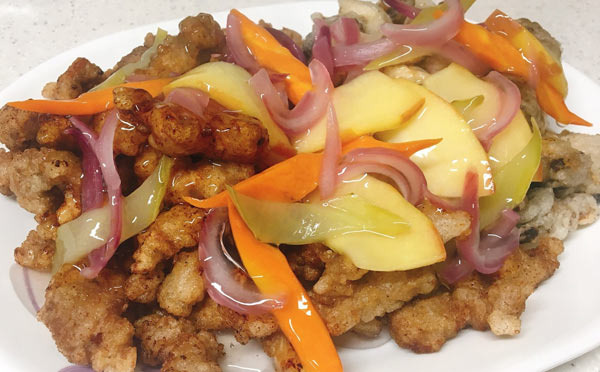
These days, sweet and sour pork is served in a crispy coating with the sauce on the side, a style known as 'dipping generation', but the 'old-school sweet and sour pork' we used to eat at Chinese restaurants was a bit different.
Back then, as soon as you ordered sweet and sour pork at a Chinese restaurant by shouting 'One sweet and sour!', the sauce would be boiling in a large wok, and the sweet and sour sauce would be poured over the crispy fried meat, filling the air with the delicious aroma of sweet and sour pork.
Let's make that sweet and sour pork. First, prepare the meat using pork tenderloin. A lean and tender cut is preferred. Cut it into bite-sized pieces, but if you cut it too thin, the texture will be weak, so cutting it to about 0.7cm thick is ideal. Season the cut meat with a little salt and pepper. Adding a tablespoon of cooking wine will help eliminate odors and make the meat even more tender.
Now, the batter is key. Old-school sweet and sour pork should be made primarily with starch rather than glutinous rice flour to maintain its unique chewiness. Pour half a cup of potato starch into water and let it sit for about 30 minutes, allowing the starch to settle. Drain the water and mix one egg white into the remaining starch. The key is to adjust the consistency to that of yogurt, not too runny.
Use plenty of oil! Heat oil in a wok to about 170 degrees Celsius, then add the meat pieces one by one. If you add too many at once, the temperature will drop and they will become soggy, so fry them in appropriate batches. After frying once, let them cool for a moment and then fry them again for extra crispiness. This is the 'double frying' secret used in Chinese restaurants.
Now, let's make the sauce. In a pot, add a little cooking oil and sauté chopped onions, carrots, and cucumbers, then add 3 tablespoons of sugar, 2 tablespoons of soy sauce, 3 tablespoons of vinegar, one cup of water, and half a tablespoon of ketchup, and bring to a boil. In the old-school style, ketchup is not a main ingredient but is added just for seasoning. When you taste it, the sweet and sour flavor should spread throughout your mouth. Finally, add a cornstarch slurry (1 tablespoon of starch + 2 tablespoons of water) to adjust the thickness.
Now, place the fried meat on a plate and pour the hot sauce over it. When the sauce sizzles and spreads over the meat, it truly brings back the feeling of an old-school Chinese restaurant. Adding a piece or two of pineapple completes the dish. The combination of crispiness and sweet and sour flavor harmonizes in your mouth, which is the charm of 'old-school sweet and sour pork'.
These days, there's a lot of talk about dipping or pouring, but isn't the old way the true original sweet and sour pork?
If you try making it, the aroma of those old Chinese restaurants will likely fill your kitchen.



 Weekend Movie Blog |
 Beauty, Health, Lifestyle Blog |
 coloradoman |
 Superman Cat Blog |
 novapixel |
  laro90 |
  MEDBIO American Doctor Blog |
  SWAT TEAM BLK |
  DREAM BIG |
  frostbite |
  330 Forever My Love |
  El Dorado |
  dralix58 |
  Gorama Round |
  Skydiving |
  dreamport |
  Yellow Snowman |
  Toaster Pizza Magic Show |
  velvetnom |
  Anytime Journey |
  Mrs. Duluth |
  jaxter |
  Atlanta Mama |
  Baguette Blog |
  Tan Sol |