

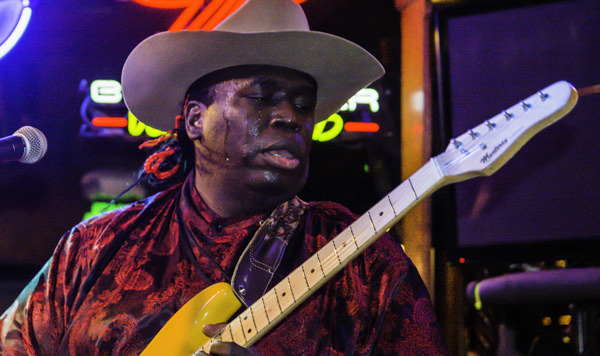
When talking about music, there's often a reaction when blues comes up.
"Oh, isn't that the music where couples dance together in bars?"
Every time I hear that, I pause for a moment. It's not entirely wrong... but it's not completely right either.
To be honest, I understand why the image of "bar music" exists.Blues was definitely played in clubs, and to say there wasn't a sensual atmosphere would be a lie.
But here's the problem. That's not the true nature of blues; it's part of its evolution.
The roots of blues lie in the American South, in the farming regions from the late 19th to early 20th century.
It started with Black laborers working in cotton fields, sharing stories of life with a guitar as the sun set.
Stories of love, longing for home, wage exploitation, and the struggles of daily life. Those became the lyrics.
It wasn't music for the dance floor. It was a language for survival.
Then urbanization changed blues. In the mid-20th century, there was a massive migration of Black people to the North in the United States.This is called the Great Migration. People flocked to Chicago, Detroit, and St. Louis, and blues followed.
When blues arrived in Chicago, it changed. Electric guitars came in, and the sound of harmonicas grew louder. It took to the club stage and gained an audience.
Muddy Waters, Howlin' Wolf. The sounds created by artists of this era shaped the image of what we know as "blues."
It's true that in this process, the club culture added a sensual atmosphere.
But that's the genre adapting to its environment, not a change in the essence of the genre.
People who have truly listened to blues for the first time often say something in common: "It feels... honest."That's right. Blues pulls out human desires, loneliness, anger, and frustration without a filter.
I want to love, I want to let go, I can't live alone. It doesn't package emotions prettily like pop music.
Those raw feelings connect directly with the listener's heart.
That's why it feels "risqué." Not because of the melody, but because of the intensity of honesty.
Blues openly sings about emotions that we usually hide.
For those who find that uncomfortable, it gets classified as "raunchy music." I've listened to quite a bit of American music, but there's an endless depth to blues when you really dig into it.
To dismiss blues as merely "cabaret music" is to completely overlook the history, tears, and resistance embedded within it.
Blues is not just a genre; it's one of the most honest forms of art created by humanity.
 NicoleKick







 There Are Such Things in the World |


 Next Year, Let's Become Rich |
 Strawberry Candy Smoothie |
 United States National Administrative Organization Stories |
 dictionary |
 CORMA FAUCHAN |

 Nanana Nanana Nanana |
  torvik |
  charger |
  holy cheese |
  Pleasant K |
  Rolling Joy Life |
  lidus |
  French Macarons |
  Central Intelligence Agency Deputy Director |
  ATL Power 1 |
  MP Forever |
  Soy Angelino |
  San Jose Pop |
  Pronunciation Yo |
  hamooo |
  Entip |
  Yavrix 92 |
  cherry cherry |
  Coastal city |
  Mazinger Z Rocket Punch |