

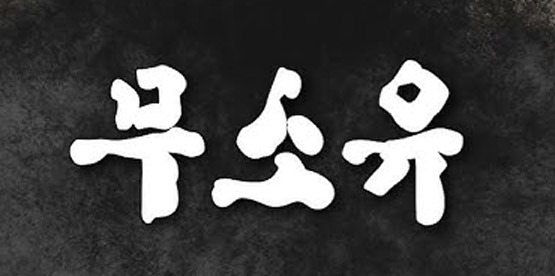
When hearing the phrase happiness in non-ownership, reactions tend to split between viewing it as a self-comfort for losers or as a sage's enlightenment.
One side has a face that says, "You're glorifying something that doesn't exist," while the other side nods in agreement, saying, "Yeah, there is just too much to manage these days."
Ironically, those who have experienced wealth or power often end up praising non-ownership even more fervently later on.
If we think about what we do the most every day, the answer is simple. It's not about making money or achieving success. It's management, endless management.
When you add a house, you automatically have to manage space, repairs, taxes, and neighbors. When you add a car, you get insurance, repairs, inspections, and parking stress as options. When you have more clothes, you spend all morning choosing outfits in front of the closet. When you have more accounts, you find yourself rummaging through various financial information to avoid missing anything. The reason humans become so busy is that they have so much to manage.
And only those who have experienced how much this management eats away at the brain truly understand. The mind is already saturated, yet thoughts like, "Did I collect everything I need to get paid?" keep repeating. Naturally, important thoughts about health or relationships with those around us get pushed to the back.
This is where the concept of non-ownership comes in.
This doesn't mean to go live in the mountains without owning anything; it's about stepping back from the management game of life a little.
By reducing unnecessary possessions, cutting down on commitments that don't need to be made, tidying up meaningless relationships, and simplifying schedules, suddenly the day feels longer. With fewer tasks on the to-do list, the mind quiets down. This leads to a shift in questions from "What can I do today to earn more money?" to "What do I want to do today?" allowing for a change to find one's own time.
When the management load decreases, a person suddenly becomes closer to themselves.
When you wake up in the morning, a few tasks come to mind, and within that, the flow of the day becomes clear.
A day with just a few tasks actually allows for better focus. As focus builds, achievements arise, and as achievements accumulate, self-esteem is formed. And when this self-esteem develops, the concern about what others think noticeably diminishes.
As possessions increase, emotional management also collapses. The more you have to lose, the greater the anxiety, and anxiety turns a person into a coward. Conversely, with less to manage, even failures have a smaller impact. This makes challenges easier and life more flexible.
Ultimately, happiness in non-ownership is not a philosophical game but an energy management strategy. Humans have a limited amount of mental energy they can use each day. If all that energy is spent on managing possessions, there's nothing left for one's own life. When management decreases, that energy returns to the individual.
From that point on, a person begins to think for themselves, live by their own standards, and move at their own pace.
Thus, non-ownership is not the glorification of poverty. Rather, it is a signal that one's ability to manage life has increased. It means one has learned to distinguish what is important from what is unnecessary. Once this distinction is possible, the noise of life diminishes, and tranquility enters that space.
And in that tranquility, a person finally hears their own voice. What is more important than possession is direction.
From that point on, happiness begins to flow naturally from the person themselves, rather than from objects or numbers.




 fortbliss |
 Folding Instructions |
 yentra |
 Cali M Law Group |
 quanta7 |
 NC Dreamer |
 Audio Mania World |

 Balan |
 North Carolina State University |
  forevergee |
  festival |
  manchester |
  constant |
  Leapfrog Move |
  vibranto |
  Tora Tora |
  yellowbutter |
  Dolly |
  US Embassy |
  NYC saladbar |
  Finding Superfoods |
  lightyear |
  song bang |
  vexomo |
  Indiana Jones |
  meloncat |
  novapixel |
  mortrix |
  Esther 1983 |