
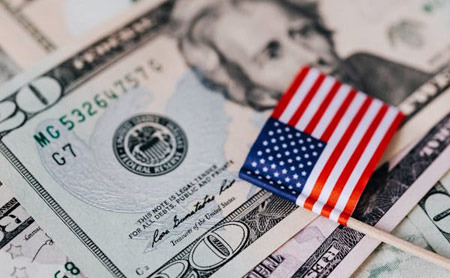
Today, the US dollar has established itself as the most important reserve currency in the world economy.
The dollar we commonly use plays a crucial role in international trade and financial transactions, being recognized as a trusted currency worldwide. But how did the US dollar come to be the reserve currency? Today, we will examine the historical background of how the US dollar became the center of the world economy.
The most significant event that established the US dollar as the reserve currency was the Bretton Woods Agreement in 1944. After World War II, as the world faced economic devastation, the United States emerged as an economic powerhouse, necessitating a new global economic order. In the Bretton Woods Agreement, 44 countries linked their currencies to the US dollar, creating a system where other nations' currencies were pegged to the dollar. In other words, each country aligned the value of its currency with the dollar, and the US dollar became the standard that could be exchanged for gold. Thanks to the strong growth of the US economy and its gold reserves, the US dollar became a stable and trusted reserve currency.
However, in 1971, the US ended the gold standard and effectively dismantled the Bretton Woods system. President Richard Nixon announced the cessation of the exchange of gold for dollars, which meant that the dollar was no longer tied to gold. Nevertheless, the dollar was able to maintain its status as a reserve currency. After the end of the gold standard, the US dollar retained its position as a sole currency, which further strengthened its use in the global economy.
In the mid-1970s, the United States entered into an agreement with the Organization of the Petroleum Exporting Countries (OPEC) to ensure that oil transactions would only be settled in US dollars. This led to oil trading being conducted in dollars, which became known as the petrodollar system. As the relationship between oil and the dollar strengthened, countries participating in global oil trade had to hold dollars to conduct transactions, further solidifying the US dollar as the center of the world economy.
By the late 20th century, the United States had established itself as the world's largest economy. Growth in trade, industry, and technology further enhanced the international trust in the dollar, leading central banks around the world to choose the US dollar as part of their foreign exchange reserves. During times of economic uncertainty or crisis, the US dollar was still regarded as a safe asset, increasing international demand. One of the main reasons the US dollar could continue to be used as the world's reserve currency was its stability and trustworthiness.
Today, the US dollar remains an important reserve currency in the world economy. In international transactions, the dollar is used as a major means of payment and transaction currency, and it is widely used in financial transactions. Notably, the proportion of dollars in the foreign exchange reserves of central banks around the world is still the highest. In financial markets, dollar-denominated bonds and stocks are traded, and in the foreign exchange market, the dollar is the most actively exchanged currency.
The US dollar has evolved from the Bretton Woods system through the end of the gold standard and the petrodollar system to become the reserve currency today. Thanks to the influence of the US in the global economy and the stability of the dollar, it continues to be the most important international currency. This status of the dollar is expected to continue playing a significant role in the global economy and financial markets in the future.








 Weekend Movie Blog |
 Beauty, Health, Lifestyle Blog |
 coloradoman |
 Superman Cat Blog |
 novapixel |
  Tonky |
  viroma |
  cookie |
  Live and that's it |
  Alright Twain |
  eatontown blog |
  HAWAII Korean Church News |
  Amore |
  linex |
  Balancework |
  laro90 |
  MEDBIO American Doctor Blog |
  SWAT TEAM BLK |
  DREAM BIG |
  frostbite |
  330 Forever My Love |
  El Dorado |
  dralix58 |
  Gorama Round |
  Skydiving |