

The story of Jesus' resurrection does not simply end with "He is alive." Rather, that is just the beginning.
The Bible recounts that for about 40 days after the resurrection, various events and their flow form the foundation of Christianity.
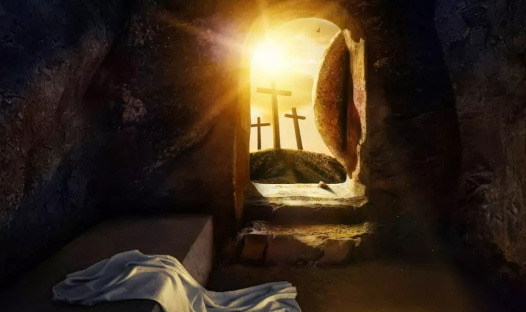
The first scene that appears is the empty tomb.
After the Sabbath, women, including Mary Magdalene, went to the tomb, but the stone had already been rolled away.
And inside, there was no body of Jesus.
In the Gospels of Matthew and John, an angel or a figure in white appears, announcing, "He is alive." What is important here is that the resurrection was confirmed first by the "absence" rather than by someone who "saw" it.
The next event is when Jesus appears directly before people. The most famous first witness is Mary Magdalene.
According to the Gospel of John, she initially does not recognize Jesus and mistakes him for the gardener. It is only when he calls her name that she realizes who he is. This scene has led to interpretations that the appearance of the resurrected Jesus was not entirely the same as before.
Mary Magdalene is one of the female disciples of Jesus mentioned in the New Testament, not to be confused with the Virgin Mary. It is said that she followed Jesus after being healed from the torment of seven demons. She is a key figure appearing at the crucifixion, burial, and as the first witness of the resurrection.
Subsequent meetings with the disciples follow. In particular, in the story of the two disciples on the road to Emmaus found in the Gospel of Luke, Jesus walks with them while concealing his identity for a time.
It is at the moment of breaking bread during a meal that the disciples recognize him. Thus, the post-resurrection Jesus is depicted not merely as a "returned being" but as one whose very mode of recognition has changed.
One of the most symbolic scenes is the incident with Thomas. According to the Gospel of John, the disciple Thomas says, "Unless I see the marks of the nails and put my finger in his side, I will not believe."
Later, Jesus appears and shows him his hands and side, confirming his identity. This scene is often cited as a representative example of the boundary between faith and doubt.
Another significant event is the reunion in Galilee. While the disciples were fishing again, Jesus appears, performs a miraculous catch, and shares a meal with them. Here, he asks Peter three times, "Do you love me?" This is interpreted as a symbolic restoration of the incident where Peter denied him three times.
Throughout all these processes, a common characteristic appears. Even after the resurrection, Jesus continues to meet with people, converse, and share meals, maintaining realistic contact.
At the same time, he also shows a different mode of existence, appearing and disappearing suddenly. The simultaneous presence of these two aspects is the core of the resurrection narrative.
The final stage is the ascension. According to the Acts of the Apostles, Jesus leaves a mission for the disciples and ascends to heaven. He also promises that "the Holy Spirit will come." After this event, the disciples do not scatter but rather begin to act actively.
What begins as a question about the empty tomb transforms into certainty through direct encounters and experiences, and that certainty leads to action. This structure becomes the starting point of early Christianity.
Thus, the resurrection is not merely a miraculous event but the starting line for all subsequent stories.







 Anova US Beauty Information |
 anchor |
 Korea Tiger News |
 Alpha and Omega World |
 Florida King |
 Nuchuhan Exploration BLOG |
 my town K blog |

 Sirin Solitude and Advancing Hand in Hand |
 Sugar Cream Door Bulletproof Noodles |
  beerdreamer |
  Kims Spring |
  White bunny |
  Kansas City Representative Singer |
  shadow 007 |
  sun walker |
  Choco Choco Star |
  midnight blue |
  honeypot |
  summer |
  adventure77 |
  flexible |
  Shintongbangtong Shin Naerin James Park |
  truepixel |
  Kathy's Blog |
  Hae Naem |
  quatspace |
  Marisol |
  Glassroom |
  Granola |