
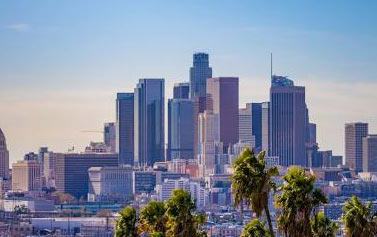
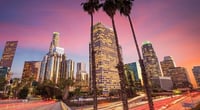
Downtown Los Angeles is an area densely populated with various commercial buildings, where many companies have their headquarters or offices, but it has faced several issues in recent years. In particular, the rise of remote work and telecommuting following the COVID-19 pandemic has led to a surge in office vacancy rates. This has significantly impacted the commercial real estate market in Downtown LA.
Office Vacancy Rate
Increase in Vacancy Rate:
During the pandemic, many companies transitioned to remote work, leading to efforts to reduce the costs of maintaining office space. As a result, the office vacancy rate in Downtown LA surged. As of 2023, the overall office vacancy rate in LA exceeded approximately 20%, with the vacancy rate in the Downtown area being even higher.For example, the commercial office vacancy rate in Downtown LA reached about 24% in mid-2023, which is significantly higher compared to the vacancy rate of 12% in 2019.
Vacancy Rate of Large and Medium Buildings:
In particular, the vacancy rate has been higher in large office buildings. Large buildings typically span multiple floors, and as companies that previously accommodated many employees have downsized or transitioned to remote work, vacancies have arisen. This has put existing large commercial buildings in a position to seek ways to be repurposed.
Causes
Remote Work and Hybrid Work:
The increase in remote work during the pandemic has led companies to reduce their need for office space, with some companies fully transitioning to remote work. This has sharply increased the office vacancy rate in metropolitan areas like Downtown LA.Economic Uncertainty:
Factors such as economic uncertainty and inflation are hindering companies' office expansions. Many companies are adopting strategies to reduce office space or implement remote work, which is impacting the commercial real estate market.Oversupply in the Real Estate Market:
From the mid-2010s to the early 2020s, many areas, including Downtown LA, saw new commercial buildings being supplied, but the decrease in demand post-pandemic has led to oversupply becoming a problem.
Issues and Responses
Economic Hardships Due to Vacancy Rates:
The increase in vacancy rates for commercial buildings means reduced income for building owners and negatively impacts local governments and the economy. In particular, a decrease in tax revenue may lead to difficulties in maintaining public services and infrastructure.Remodeling and Repurposing:
As one of the measures to address vacant buildings, some buildings are being remodeled to convert them into residential spaces or repurposed for various commercial purposes. For example, there is an increasing number of projects remodeling old office buildings into residential apartments.Space Changes for Hybrid Work Environments:
Some companies are adopting hybrid work models and are responding by enhancing dedicated spaces such as collaboration areas and meeting rooms in their offices.
Future Outlook
Adaptation and Change:
The commercial real estate market in Downtown LA is undergoing changes due to the rise of remote and hybrid work, and in the future, the flexibility of office space and collaboration-focused spaces are expected to be emphasized. Discussions on how to restructure existing office spaces will continue.Long-term Recovery Potential:
However, the commercial building market still has the potential for recovery. If the economy recovers and companies return to physical office spaces, vacancy rates may decrease, opening up new market opportunities.
In conclusion, Downtown LA is currently facing issues with commercial building vacancies, but there is potential for gradual recovery through adaptation to the changing work environment and real estate market.




 Weekend Movie Blog |
 Beauty, Health, Lifestyle Blog |
 coloradoman |
 Superman Cat Blog |
 Victory 1988 |
  Korean Mom |
  My NYC |
  moo moo |
  Mr Oh |
  forevergee |
  festival |
  manchester |
  constant |
  Leapfrog Move |
  vibranto |
  Tora Tora |
  yellowbutter |
  Dolly |
  US Embassy |
  NYC saladbar |
  Finding Superfoods |
  lightyear |
  song bang |
  vexomo |
  Indiana Jones |