


Located in northern Bergen County, Closter has long been a preferred area for Korean families due to its excellent public schools and quiet residential environment. Although it is a small town with a population of around 8,700, it has seen a steady influx of families moving from Manhattan and Queens for educational reasons in recent years, resulting in a gradual increase in population.
Closter does not have a large industrial complex, but its geographical advantage of being about 30 minutes from Manhattan via the George Washington Bridge has attracted professional households working in finance, law, and healthcare. Nearby hospitals in Englewood and Hackensack have recently expanded their hiring, leading to an increase in demand for healthcare professionals to settle in the area.
The unemployment rate in Bergen County hovers around the mid-3% range, which is lower than the New Jersey state average of around 4%. The income growth rate is steady at about 3-4% annually, indicating a stable upward trend rather than a rapid boom.
In terms of infrastructure, discussions are ongoing about improving bus routes to New York and access roads to the George Washington Bridge throughout Bergen County, and plans for revitalizing small commercial areas near downtown Closter are also being considered. However, in low-density towns like Closter, which are already fully developed, the focus is likely to be on renovating existing homes and small infill developments rather than large-scale new developments.
Institutions like the Brookings Institution and the Milken Institute commonly cite educational infrastructure and a stable professional employment base when evaluating the New York metropolitan area. Closter possesses both of these factors, leading to assessments that it is likely to see steady, albeit gradual, increases in property values over the next decade rather than explosive population growth.
Of course, there are risk factors as well. New Jersey's high property taxes can be a burden each year, and periods of reduced transaction volumes may occur depending on interest rates. Given the market structure that relies on school district premiums, a decrease in student numbers or changes in the competitiveness of nearby school districts are variables to watch in the long term.
From the perspective of Korean households, Closter can be seen as a place where a strategy of combining actual residence with long-term ownership is more suitable than seeking short-term price gains. With steady demand for school districts, rental yields are also relatively stable, and home prices have shown a gradual upward trend.
Ultimately, while Closter may not be a city with an explosive growth story, it is assessed as a region likely to maintain a steady trajectory over the next decade based on its stable employment base and educational infrastructure.
 RadishPlanet
 easy go







 garlic bread |
 Sugar Cream Door Bulletproof Noodles |
 urbanmint |
 |
| 
 Premium Gas Camp |
 Silent Sea |
 Glow Yo |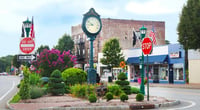
 Anytime Journey |
 bearcup |
 zymit |
  draxen |
  gallery |
  milkyotter |
  Zoom Zoom Zoom |
  Minnesota Lakes and Clouds |
  noraro |
  tervox95 |
  vale vale |
  yentra |
  Golden life |
  andrew park |
  Peter Pan Pet |
  Balan |
  Cali M Law Group |
  neroyo |
  Dreams Come True as Desired |
  Khan Film Blog Production |
  coloradoman |
  Living Economy Information Blog |
  rustley |