

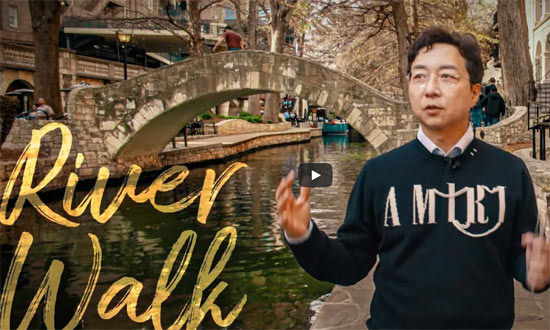
As you go down to the lower part of downtown San Antonio, a waterway appears, similar to Seoul's Cheonggyecheon.
The River Walk is the place where you can see people walking along the water, restaurants lining the banks, and boats passing by slowly.
The River Walk originally started as a flood control project. San Antonio suffered significant damage from repeated flooding, and instead of covering or eliminating the river, the city chose to embrace it within the urban landscape. They redesigned the river not to hide it, but to make it a part of people's living space. The result is the famous urban scenery we see today.
This story connects to Korea through Cheonggyecheon. Many people think of Cheonggyecheon as a unique experiment in Seoul, but it is actually the result of long-term research on overseas cases. Among them, San Antonio's River Walk was one of the representative models for urban waterfront restoration.
In the past, Cheonggyecheon was the complete opposite of what it is now. It was a dark and dangerous space under a covered elevated road, a scar left by Seoul's rapid industrialization. However, instead of widening the road, the city decided to remove it entirely and let the water flow again. This choice, prioritizing human experience over urban efficiency, resembles the philosophy of the River Walk.
The commonality between the two spaces is clear. First, they both temporarily set aside the car-centric urban structure. Both the River Walk and Cheonggyecheon are designed based on pedestrian speed rather than vehicle flow. So when you visit, you naturally slow down your pace. Second, they coexist with commerce and relaxation. There are shops and cafes along the river, but there is also space to sit and quietly watch the water.
Of course, there are differences as well. The River Walk has a much stronger focus on tourism and commercial functions, acting as an engine for the city's economy. In contrast, Cheonggyecheon has relatively greater public significance and symbolism. It strongly conveys the message of restoring nature in a hyper-dense city like Seoul. However, the roots are the same: the idea of not eliminating the river, but revealing it again.
This kind of urban regeneration is important not just because it looks nice. Ultimately, cities are spaces where people reside. A city with a flowing river breathes with the emotions of its people.
Walking along the river in San Antonio, memories of walking in Seoul's Cheonggyecheon overlap. Different continents, different cultures, different languages, yet the way cities treat people is surprisingly similar. Thus, Cheonggyecheon is not just a simple restoration, but a product infused with the experiences of various cities around the world.






 candytip |
 Gold Bar |
 Pirate Ship Popcorn Maker |
 Montgomery Mom |
 Anjollinya Blog |
 Helpful Life Stories |
 American Man in a Mask |
 Hajiwon Blog Hair Salon |
 Make My Day |
 TEXAS Fishing Boat |
  laro90 |
  MEDBIO American Doctor Blog |
  SWAT TEAM BLK |
  DREAM BIG |
  frostbite |
  330 Forever My Love |
  El Dorado |
  dralix58 |
  Gorama Round |
  Skydiving |
  dreamport |
  Yellow Snowman |
  Toaster Pizza Magic Show |
  velvetnom |
  Anytime Journey |
  Mrs. Duluth |
  jaxter |
  Atlanta Mama |
  Baguette Blog |
  Tan Sol |