
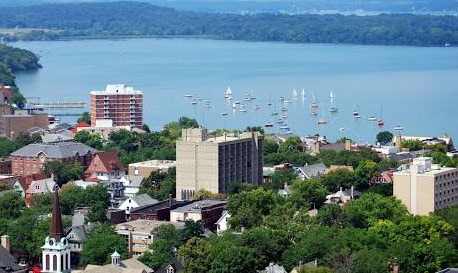
Wisconsin is a state located in the American Midwest, with a rich and diverse history that spans from Native American times, through the European colonial era, to its development as a U.S. state.
Land of the Natives
- Wisconsin has been inhabited by Native Americans for thousands of years, with the Ho-Chunk, Menominee, Ojibwe, Fox, and Sauk tribes living in the area.
- The Native Americans in this region relied on hunting, fishing, and agriculture, thriving especially around the Mississippi River and the Great Lakes.
- The name "Wisconsin" is believed to be derived from a Native American language, meaning "red stone" or "land of the river."
European Exploration and Settlement
- In 1634, French explorer Jean Nicolet was recorded as the first European to explore the Wisconsin region.
- Subsequently, the French developed the area as a center for fur trading and established trade relations with the Native Americans.
- After the French and Indian War in 1763, Wisconsin came under British rule, and after the American Revolutionary War ended in 1783, it was incorporated into U.S. territory.
Period of U.S. Territory
- In 1787, Wisconsin became part of the Northwest Territory.
- In the early 1800s, the U.S. government acquired most of the land in the area through treaties with Native Americans, and settlers began to migrate in large numbers.
- Initial economic activities centered around agriculture and lumbering, particularly utilizing the abundant timber resources in the northern region.
Statehood
- Wisconsin was designated as the Wisconsin Territory in 1836 and was elevated to the 30th state of the United States on May 29, 1848.
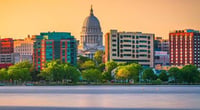
- Madison was selected as the state capital, named after President James Madison.
Economic and Industrial Development
- Agriculture: Since the mid-19th century, Wisconsin has developed into an agricultural hub, particularly known as "America's Dairyland" due to its dairy farming.
- Manufacturing: In the late 19th and early 20th centuries, the brewing and machinery industries grew significantly, centered around Milwaukee.
- Immigration: Immigrants from Germany, Scandinavia, and Ireland settled in Wisconsin, contributing to the state's cultural and economic development.
Modern History and Change
- In the early 20th century, Wisconsin became a center for progressive political movements, particularly advocating for labor rights and educational reforms.
- The state continues to maintain agriculture and manufacturing as its main economic foundations, while recently, high-tech and healthcare industries have been growing.
Present-Day Wisconsin
- Population: Approximately 5.9 million, predominantly white, with German Americans making up the largest percentage.
- Economy: Wisconsin is well-known for cheese and dairy production, brewing, manufacturing, and tourism.
- Tourist Attractions: Door County, Wisconsin Dells, and historic breweries in Milwaukee are among the major attractions.
Wisconsin has played an important role in American history through agriculture, manufacturing, and political progressivism, and it continues to be recognized for its unique culture and economic contributions.




 middlekick |

 Wiscon Shin Blog |
 Forever Coco is Bangga |
 Superman Cat Blog |
  Atlanta Mama |
  Baguette Blog |
  US Embassy |
  Korean Mom |
  My NYC |
  moo moo |
  Mr Oh |
  forevergee |
  festival |
  manchester |
  constant |
  Leapfrog Move |
  vibranto |
  Tora Tora |
  yellowbutter |
  Dolly |
  NYC saladbar |
  Finding Superfoods |
  lightyear |
  song bang |