
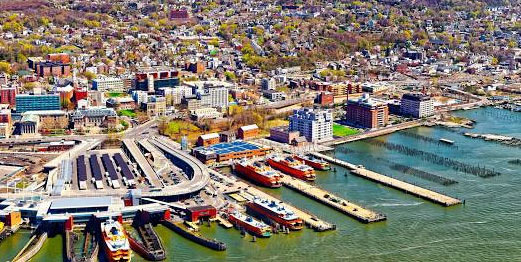
Staten Island is one of the five boroughs of New York City, known for being relatively quiet and rich in nature compared to the other boroughs. This area is located at the eastern tip of New York City and is connected to Brooklyn and New Jersey. Let's take a look at key information, history, population, and life in Staten Island.
History
Staten Island was discovered by Henry Hudson in 1609 and was developed during the Dutch colonial period. It was occupied by the British in 1665 and incorporated into the British colonies, later becoming a major port connected to New York City in the early 19th century. From the late 19th century to the early 20th century, industrialization took place, leading to an influx of immigrants, and as transportation links to New York City improved, the population increased. In 1898, Staten Island was officially consolidated as part of New York City.
Population
The population of Staten Island is estimated to be around 470,000. It boasts the smallest population among the boroughs of New York City, but many people prefer to live here due to its spacious area and quiet atmosphere. The area is primarily home to middle and upper-class residents, offering a suburban environment compared to other parts of New York City. Staten Island is perceived as relatively peaceful and residential, with many people wanting to live here to escape the hustle and bustle of the city.
Average Income
The average household income in Staten Island is about $74,000, which is slightly higher than the New York City average. This indicates a good living environment and that many residents have stable jobs. Staten Island has many small businesses and commercial districts, but many residents tend to commute to large corporations in other boroughs.
Climate
Staten Island has a temperate climate with distinct four seasons. In summer, temperatures can rise to 80°F (27°C), with humid and hot weather persisting. Winters are relatively cold, with temperatures averaging between 30°F (-1°C) and 40°F (4°C), and snow is common. Spring and fall are mild, with many clear days. Due to its proximity to the sea, it is significantly influenced by a maritime climate.
Main Attractions of Staten Island
Staten Island Ferry: The ferry service connecting Staten Island and Manhattan is an iconic mode of transportation in New York City. The views of the Statue of Liberty and the Manhattan skyline from the ferry are stunning and very popular among tourists. The ferry operates for free and runs 24 hours.
The Staten Island Greenbelt: This area is a nature reserve of over 2,800 acres, featuring many trails suitable for hiking and biking. The green spaces in Staten Island are larger compared to other boroughs and are famous for enjoying nature.
Snug Harbor Cultural Center & Botanical Garden: This cultural center is known for its historic buildings, beautiful botanical garden, and spaces for various artistic activities. Originally used as an orphanage, it has now transformed into a cultural hub.
Historic Richmond Town: A historic village in Staten Island, it preserves buildings from the 17th and 18th centuries, offering a glimpse into old New York. Various historical exhibitions and events are frequently held here.
Franklin D. Roosevelt Boardwalk and Beach: This beach is a popular spot in summer, providing a comfortable space for walking along the sea or sunbathing.
The Staten Island Museum: A museum featuring exhibitions on the natural history, art, and local history of Staten Island, attracting much interest from both residents and tourists.
Staten Island offers a relatively quiet and nature-friendly environment compared to other boroughs of New York City. Characterized by a suburban atmosphere, spacious residences, and rich natural and cultural attractions, this area is a place where many seek relaxation and leisure. With convenient transportation and proximity to Manhattan, it is recognized as a great area for families to reside.








 crystalo |
 lavender |
 dermoon |
 Belgray Miscellany |
 forevergee |
  festival |
  manchester |
  constant |
  Leapfrog Move |
  vibranto |
  Tora Tora |
  yellowbutter |
  Dolly |
  US Embassy |
  NYC saladbar |
  Finding Superfoods |
  lightyear |
  song bang |
  vexomo |
  Indiana Jones |
  meloncat |
  novapixel |
  mortrix |
  Esther 1983 |