
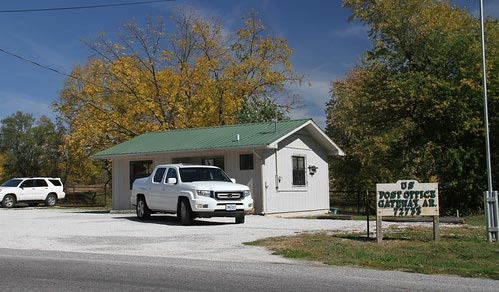
Many people think of quiet rural landscapes in the southern United States when they think of Arkansas, but a closer look reveals that the local economy has quite a diverse structure. It is not just agriculture or centered solely on manufacturing; energy, food, distribution, and healthcare are all mixed together to create a solid local foundation.
The reason Arkansas does not receive much attention in the U.S. is simply due to its quiet image, but it is more accurate to view it as a region where substantial industries are steadily accumulating. And an unexpected point is that this area is also famous for watermelons. In particular, in the southern region and some counties, watermelon festivals are held every summer, making it one of the agricultural symbols of Arkansas.
In terms of economic scale, Arkansas may not attract national attention. However, the fact that Walmart, which has changed the landscape of the entire U.S. retail industry, is headquartered in Bentonville, Arkansas, is not just a local brag but signifies real employment effects and corporate infrastructure.
Walmart is the largest retail company in the world, and the fact that Arkansas is at its center means that this region holds the key artery of the distribution and logistics industry. Jobs in IT, data, and logistics management are solidly supplied around Walmart, influencing local real estate, business districts, and population movements. In other words, a quiet yet massive distribution ecosystem is sustaining Arkansas.
Additionally, agriculture still plays a significant and healthy role in Arkansas. Major crops include rice, chicken (poultry industry), soybeans, and corn. Among these, rice production competes for the top spots in the U.S., and the long-grain rice grown in this region is quite well-known in Korea and East Asia.
Interestingly, the 'watermelon' plays a special role here. In the southeastern area of Hope and several regions in the south-central part, watermelon serves as a specialty product intertwined with the local economy.
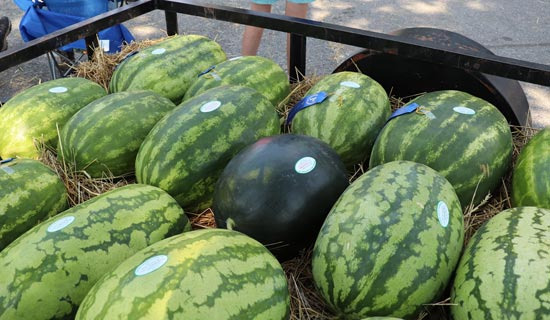
It is not just a well-selling agricultural product but can be considered a star player driving summer tourism, festivals, and local marketing. In Hope, the giant watermelon is a local specialty, and a culture of watermelon size contests and celebrations has developed, with good quality leading to strong sales in other regions.
Focusing only on agriculture and distribution could lead to an underestimation of Arkansas. The manufacturing sector is also robust. It particularly excels in steel, machinery, and paper production, and the pharmaceutical and medical equipment manufacturing industries are steadily growing. Although Arkansas is not a major state for medical infrastructure, there are increasing cases of health-related companies establishing factories here for cost-saving purposes. In other words, due to low labor costs, land costs, and transportation accessibility, it is perceived as an attractive production base for companies.
The energy industry cannot be overlooked either. Arkansas has significant natural gas reserves, and shale gas development is taking place in some areas. This has led to a steady influx of investments and related personnel from energy companies, contributing to local finances. Additionally, the river transport in the southern region acts as a strategic advantage in reducing freight transport costs.
In summary, Arkansas is a state with a quietly diversified economic structure encompassing agriculture, manufacturing, distribution, and natural gas. While people may think of Arkansas as "wide farmlands and quiet towns," in reality, it is a place where a global retail company is established, supports the U.S. rice industry, and has the power to create local identity through a watermelon brand that hosts festivals.








 The Day the Sun Rises |
 US Home Buying Information Home Insurance |

 Information on All Regions of the United States |
  vibranto |
  Tora Tora |
  yellowbutter |
  Dolly |
  US Embassy |
  NYC saladbar |
  Finding Superfoods |
  lightyear |
  song bang |
  vexomo |
  Indiana Jones |
  meloncat |
  novapixel |
  mortrix |
  Esther 1983 |
  fortbliss |
  Moscow Kim |
  My Two Way |
  toastyfox |
  FLORIDA Acus |