

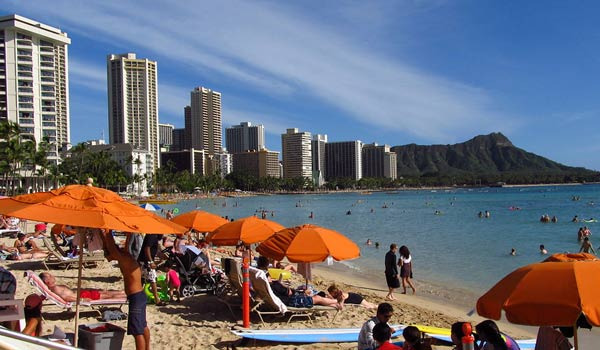
Hawaii... just hearing the name is exciting. It's the dream island everyone longs for during vacation season.
With long swaying palm trees, the dazzling blue ocean, and perfect summer weather all year round.
However, the perspective of tourists stepping off the plane with their packed bags is completely different from that of locals who wake up every morning to face the battle of commuting.
For the countless visitors, everything seems like a romantic 'Perfect Vacation,' but for the locals, the cost of maintaining that beautiful paradise is no joke. Today, I want to share the tough and realistic story of living in Hawaii, hidden behind the glamorous Waikiki beach.
The first reality we face is the terrifying 'cost of living.' Hawaii's Cost of Living Index is a staggering 193.
This means that when the national average is set at 100, it costs nearly double that amount.
While we know that most goods have to be shipped from the mainland by boat or plane, making them expensive, every trip to the grocery store leaves our wallets devastated.
Paying $7 to $8 for a gallon of milk is just the beginning, and the prices of everyday groceries can be 30% to as much as 50% higher than on the mainland.
In fact, according to 2025 data from the Bureau of Labor Statistics (BLS), food prices in Hawaii have risen by 4.3% compared to the previous year. It's already expensive, and it keeps going up, making grocery shopping daunting.
What about housing costs? Currently, the median rent in Honolulu is around $2,083 per month. Just breathing costs over $2,000 a month in rent. And if you think about buying a home, the median price for a single-family home on Oahu has reached a whopping $1,112,500. While these numbers might seem like gossip for tourists saying, "Wow, Hawaii is expensive!" for locals who have to stretch their paychecks to survive, it's a heavy reality.
The second issue is the 'traffic hell' that is far from romantic. Tourists happily cruising along the coastal roads with the blue ocean beside them look so content. But Honolulu's traffic congestion is at 50.5%, and the average commuter wastes 88 hours a year just sitting in traffic.
Due to the island's geography, the road network is limited, and when cars pile up during rush hour, there's no solution. Moreover, during peak tourist season, rental cars flood the island, turning already congested roads into parking lots.
This creates a significant dilemma for Hawaii. A staggering 23-24% of Hawaii's GDP comes from the tourism industry. So, we can't completely dislike the tourists who support our livelihoods, but we also can't fully welcome the disruption they bring to our daily lives.
Honestly, I don't often feel like leaving this island. Why? Because when I see the sunset painted red on my way home or dip my feet in the blue ocean in front of my house on the weekend, I think, 'Yes, this is why I endure the struggles of living here,' and my heart melts a little. Whether it's a desert or an island, the cost of maintaining the place I love is worth it.However, I hope that tourists visiting Hawaii can understand this at least once in their hearts. The fantastic paradise you enjoy is maintained quietly by the hard work and tears of countless locals.
So, when you come to Hawaii, please respect the nature and people here a little more, and if you meet local agents or restaurant servers who are doing their best to provide good service with a smile, I hope you can tip them generously.
That warm gesture truly means a lot to locals living in the tough cost of living.
 Amulius
 OCAllGood
 AlwaysYou
 ShinIsBest
 LunaStar


 Alpha and Omega World |
 Florida King |
 AH LALA |
 Victory 1988 |
 Panorama Kstar |
 HAWAII Korean Church News |
 Unknown Dog Walk blog |
 Public School Education System |
 Hawaii Tourist Information |
 averagestudent |
  chicpo |
  monorama tone |
  Good News Good Thoughts |
  Kentucky Fried Chicken |
  bloomberg |
  morninpo |
  my town K blog |
  bravik31 |
  Various Knowledge and Information in the USA |
  orvik90 |
  San Gabriel Mountains |
  quanta7 |
  Fransco Family |
  leonee |
  Augusta 90 |
  Project Tomorrow |
  DOCTOR MED |
  Say IT Now |
  Always Dreaming of Big Success |