
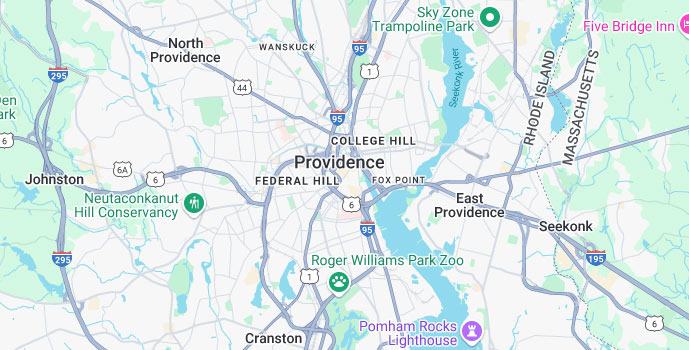
Providence is the representative city and capital of Rhode Island, and it shows quite a vibrant traffic volume for its size. It is considered one of the major urban centers on the East Coast, and the connection with nearby metropolitan areas (like Boston) is active, creating a constant flow of people. For those planning to travel or live here, I have organized some useful traffic information.
Rush Hour
- Morning Rush Hour: Generally, congestion is high from around 7 AM to 9 AM on weekdays. Especially, many vehicles commute through I-95, and the section going into downtown Providence (particularly from Warwick/Cranston) often gets very congested.
- Evening Rush Hour: The peak is around 4 PM to 6 PM, with many cars leaving the city center towards the outskirts. Similarly, there is a high possibility of congestion around the intersections of I-95 and nearby highways (I-195, I-295).
Main Roads and Highways
- I-95: This is a key arterial road that runs north-south through Rhode Island, passing through downtown Providence and continuing north to Massachusetts. It is almost essential when traveling along the East Coast or heading towards Boston.
- I-195: A convenient road for moving east from downtown Providence. It connects well to southern Massachusetts areas like Fall River and New Bedford.
- I-295: A bypass road designed to avoid the city center, going around the western and northern outskirts. If you want to travel long distances while avoiding congestion in downtown Providence, this route is recommended.
- US-1: While there are sections that are not highway, it follows the Rhode Island coast and offers beautiful scenery. It is recommended for a leisurely drive.
Public Transport
- RIPTA (Rhode Island Public Transit Authority) buses: There are bus routes covering all of Rhode Island, with several directions connecting around downtown Providence (near Kennedy Plaza). It is convenient for exploring the city or moving to nearby areas like Brown University, RISD, and Federal Hill.
- MBTA Commuter Rail & Amtrak: You can use the MBTA commuter rail to Boston or Amtrak, which connects to major cities in the eastern United States, through Providence Station. It takes about an hour to Boston directly, making it great for commuting or day trips.
Parking Situation
- Downtown Area: The downtown area, where cultural and administrative facilities are concentrated, has limited parking, and paid parking can be quite expensive. Street parking often has time restrictions, so be sure to check the signs in advance.
- Outskirts and Residential Areas: Parking is relatively spacious around residential areas, but it can be tricky near universities due to the high number of student and staff vehicles.
- Parking Apps & Pre-check: Using parking-specific apps or Google Maps to check availability, fees, and time restrictions in advance can help reduce stress.
Traffic Tips & Precautions
- Use Traffic Information Apps: It is recommended to check real-time traffic conditions using apps like Google Maps or Waze before departure. During morning and evening rush hours, traffic can be heavy, so consider alternate routes or public transport.
- Winter Driving Caution: Winters in New England can be cold and snowy. When snow or rain is frequent, the road surface may freeze or become slippery, so prepare winter tires or chains in advance and pay attention to road conditions.
- Toll Bridges: Some bridges, like those towards Newport (such as the Newport Bridge), have tolls, so it is convenient to prepare cash or E-ZPass in advance.
- Pedestrians and Bicycles: There are bike lanes and pedestrian paths throughout the city, but the infrastructure is not as excellent compared to other large cities in the East. It is good to be cautious of crosswalks and bike lanes while driving.
In summary, Providence, despite being a small city, is well connected to surrounding areas, and you can often see heavy traffic during peak commuting hours. Fortunately, the highway network is quite well established, allowing for quick exits from the city, and public transport is sufficiently useful for traveling within the city and nearby areas.
Especially with good access to large cities like Boston, it is an advantage that you can relatively easily move around various places in the metropolitan area while living or traveling. If you are planning a visit, refer to the traffic tips mentioned above for a more relaxed travel experience!





 Rhode Island Good People |

 pixelhaven |
 Sunny Sunday |
  Tonky |
  viroma |
  cookie |
  Live and that's it |
  Alright Twain |
  eatontown blog |
  HAWAII Korean Church News |
  Amore |
  linex |
  Balancework |
  laro90 |
  MEDBIO American Doctor Blog |
  SWAT TEAM BLK |
  DREAM BIG |
  frostbite |
  330 Forever My Love |
  El Dorado |
  dralix58 |
  Gorama Round |
  Skydiving |