

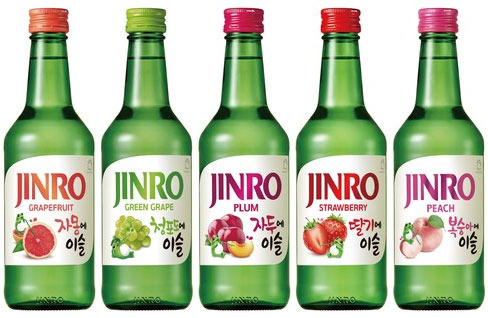
These days, having a drink with friends on the weekend feels like a small happiness that helps get through the week, even if it's not true happiness.
As a result, going to Korean restaurants in Centreville or Annandale to grill bulgogi and samgyeopsal while enjoying soju, it seems like the world has changed a lot seeing that even American kids are looking for soju now.
It used to be a drink only consumed at Korean restaurants, but at some point, with the Korean Wave gaining momentum, now it's being sold at college bars and even trendy cocktail bars with signs saying "soju cocktail."
Seeing that, I thought that the American drinking culture, which has been centered around strong drinks like whiskey and vodka, has found a niche with soju, which has a lighter alcohol content. It has become a good option for those who prefer lighter drinks.
And since Korean food is so popular these days, soju is treated not as a side drink but as a main one.
Soju cocktails with spicy chicken wings, the combination of barbecue and soju with beer, sweet fruit soju with ramen... seeing these combinations, it has become a culture of experiencing drinks alongside food.
Especially since fruit soju like peach, plum, and yuzu feels similar to hard seltzer, it's sweet and easy for women to drink, and the buzz isn't too strong, making it perfect for date drinks and casual gatherings. The soju we used to buy and drink without a second thought has become a trendy drink that sets the mood here.
Interestingly, bartenders have started to completely reinterpret soju in their own way. It's not just "restaurant alcohol" anymore; they use it as a base that mixes well like vodka, and create menus by lightly adding fruit or herb flavors like gin.
They even give names like Sakura Sunrise, Seoul Mule, and Soju Margarita, packaging it as if it's not Korean alcohol but American alcohol. At first, it seemed strange, but now it's naturally included in local bar menus. Since many scenes of actors drinking soju appear in Korean dramas on Netflix, it feels like people are experiencing the culture from the dramas directly.
So, I think the reason soju is loved in America now is that we are in an era where the 'experience' contained in a glass of soju is what sells.
The feeling of Korean culture subtly seeping in with each sip, the sweetness and smoothness, and the moderate buzz feels like a new journey for people. When you think about it, it's just a bottle of Korean alcohol, but after being localized here, it has completely gained a different identity.
It seems that soju is quietly, yet surely, penetrating deeper into the daily lives of Americans today.






 Tesla X |
 Next Year, Let's Become Rich |
 Kondae Garusong Blog |
 tervox95 |
  Tonky |
  viroma |
  cookie |
  Live and that's it |
  Alright Twain |
  eatontown blog |
  HAWAII Korean Church News |
  Amore |
  linex |
  Balancework |
  laro90 |
  MEDBIO American Doctor Blog |
  SWAT TEAM BLK |
  DREAM BIG |
  frostbite |
  330 Forever My Love |
  El Dorado |
  dralix58 |
  Gorama Round |
  Skydiving |