
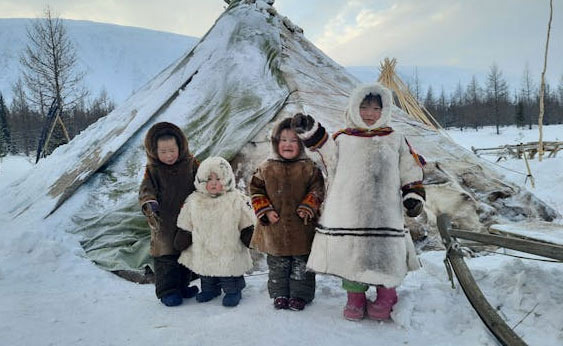
The Alaska Eskimos are indigenous people who have lived in the Arctic for thousands of years, developing a unique culture adapted to the cold environment. The Eskimos are generally divided into Inupiat and Yupik, and their way of life and traditions are an important part of Alaska's history and identity.
Main Groups
Inupiat
- Primarily reside in northern and northwestern Alaska.
- Closely related to the Inuit, which means "the people".
Yupik
- Distributed in western and southwestern Alaska.
- Derived from Yup'ik, meaning "the people".
Language
- Inupiaq and Yupik are the main languages of the Eskimos.
- Used alongside English, with language education as part of cultural preservation efforts.
Lifestyle and Livelihood
The Eskimos have maintained traditional lifestyles adapted to extreme natural environments.
Food Procurement
Hunting and Gathering:
- Hunt whales, seals, caribou, and fish.
- Gather berries and root vegetables.
Whale Hunting:
- Inupiat typically hunt bowhead whales in spring using boats (umiak).
- Whales are utilized for food, oil, bones, and skin.
Traditional Dwellings
- Igloo:
- A winter dwelling of the Inupiat, a dome-shaped house made of snow and ice.
- Semi-permanent Dwellings:
- Yupik live in semi-permanent houses made of earth and wood.
Clothing
- Wear parkas made of seal skin, caribou fur, and polar bear fur to prepare for extreme cold.
Culture and Traditions
Art:
- Carvings, masks, and jewelry reflect the creativity of the Eskimos.
- Carvings made from whale bones and ivory are famous.
Dance and Music:
- Arctic drum dances are an important part of social interaction and rituals.
- Yupik use traditional drums and enjoy group dances and songs.
Myths and Oral Traditions:
- The Eskimos pass down wisdom through myths and legends about nature and animals.
Modern Changes and Challenges
Changing Lifestyles
- Increasing cases of moving to urban areas away from traditional lifestyles due to modernization and globalization.
- Many engage in commercial activities instead of hunting for livelihood.
Environmental Changes
- Climate change is causing a reduction in glaciers and sea ice in the Arctic, threatening traditional hunting and survival methods.
Cultural Preservation
- Ongoing efforts by communities and governments to preserve language, art, and traditions.
- Attempts to integrate cultural education and traditional hunting with modern technology.
Main Residential Areas
- Barrow (now Utqiagvik):
The largest Eskimo community in the Arctic. - Nome:
A major Yupik residential area in western Alaska. - Kodiak Island:
Home to marine Yupik people.
The Alaska Eskimos have formed a unique culture in extreme natural environments, and their traditions are at the core of Alaska's identity and natural heritage. Despite modernization and environmental changes, the Eskimos continue to preserve their traditions and adapt to new challenges while maintaining their identity.




 AL ALASKA |
 Information on Area Codes in the Americas |
 Sunny's Travel in America |
  Tonky |
  viroma |
  cookie |
  Live and that's it |
  Alright Twain |
  eatontown blog |
  HAWAII Korean Church News |
  Amore |
  linex |
  Balancework |
  laro90 |
  MEDBIO American Doctor Blog |
  SWAT TEAM BLK |
  DREAM BIG |
  frostbite |
  330 Forever My Love |
  El Dorado |
  dralix58 |
  Gorama Round |
  Skydiving |