
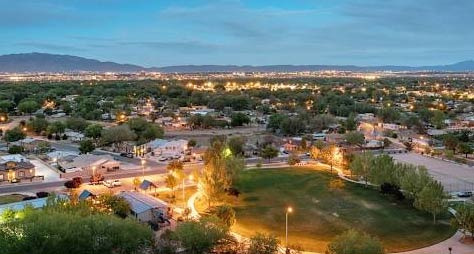
Albuquerque is the largest city in New Mexico and a center of economy, culture, and education, with a history deeply connected to the westward expansion of the United States.
Albuquerque is a city with diverse cultures and historical backgrounds, playing a regionally significant role.
History of Albuquerque
Founded: Albuquerque was established in 1706 as a Spanish colony. At that time, this area was part of the northern frontier of the Spanish Empire, named after the Spanish military officer Álvaro de Albuquerque. Initially, it thrived as part of the Spanish colony, with commerce and agriculture being important industries.
Post-American Independence: As a result of the Mexican-American War in 1846, Albuquerque became part of the United States, and in the 1880s, the city began to rapidly develop with the connection of the railroad. By the early 20th century, it had established itself as a center of commerce and transportation in the American West, particularly expanding in commerce and economy with the growth of the technology industry and military bases.
Modern Era: Today, Albuquerque is noted for its technology industry, education (home to the University of New Mexico), and cultural diversity. The city has developed nuclear research and aerospace industries, and scientific research in nearby areas like Los Alamos also plays a significant role.
Population of Albuquerque
- Total Population: The population of Albuquerque in 2020 was over 560,000, making it the largest city in New Mexico.
- Population Growth: Since the late 20th century, the population has been steadily increasing, growing as a metropolitan center of commerce, industry, and culture.
Racial Composition of Albuquerque
- White: Approximately 50% (the largest proportion of Albuquerque's population)
- Hispanic/Latino: Approximately 47% (Albuquerque is a city with a large Hispanic population, significantly influencing its culture)
- Black or African American: Approximately 3%
- Asian: Approximately 2%
- Other Races: Approximately 1%
Albuquerque is a city where Hispanic and Latino cultures have a significant influence, blending traditional and modern cultures from Spain and Mexico.
Median Income in Albuquerque
Median Household Income: The median household income in Albuquerque is around $53,000 to $55,000. This is slightly lower than the national average but is considered relatively high within New Mexico.
Economic Characteristics:
- The economy of Albuquerque is based on technology, manufacturing, education, healthcare, military, and research industries. Particularly, the aerospace industry, nuclear research, and advanced technology sectors are major economic activities.
- Educational institutions like the University of New Mexico make significant contributions to Albuquerque's economy, and scientific research institutions like Los Alamos National Laboratory lead research and technological innovation in the region.
Albuquerque serves as the economic center of New Mexico, with technology, culture, and education industries playing important roles. This city, with a large Hispanic population, boasts a unique atmosphere that blends Spanish and Mexican cultures with American Western culture. Economically, it has strengths in the technology industry and education sector, with median income levels remaining relatively stable within the state.







 rainyday |
 Say Yes in English |
 Pointy |
 Mrs New Mex |
 Southwestern |
  Tonky |
  viroma |
  cookie |
  Live and that's it |
  Alright Twain |
  eatontown blog |
  HAWAII Korean Church News |
  Amore |
  linex |
  Balancework |
  laro90 |
  MEDBIO American Doctor Blog |
  SWAT TEAM BLK |
  DREAM BIG |
  frostbite |
  330 Forever My Love |
  El Dorado |
  dralix58 |
  Gorama Round |
  Skydiving |