

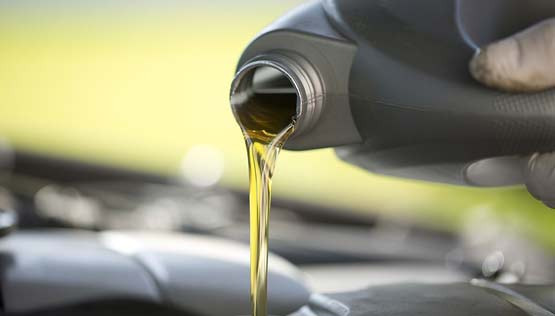
"When should I really change it?" This is a common question, and the answer varies quite a bit depending on the age of your car.
In the past, the saying was "Change it every 3,000 miles!" which became a sort of rule, but this is hardly applicable to modern vehicles.
For cars made before 2010, the engine design was simpler, they ran hotter, and the oil would get dirty quickly, so changing it every 3,000 to 5,000 miles was appropriate.
Back then, conventional or semi-synthetic oils were commonly used, which is a big reason why more frequent changes were necessary. In contrast, cars made after 2010 have much better engine technology and typically use synthetic oil, allowing for changes every 7,500 to 10,000 miles without issue.
Some models can even go beyond 10,000 miles without any problems.
Hybrid and luxury brand vehicles often have longer recommended intervals.
The issue is the weather in Texas. Here, just parking your car outside in the summer can heat up the engine significantly.
In such hot regions, engine oil deteriorates quickly, and the strain on the engine is greater. Additionally, with traffic jams and air conditioning running at full blast, cars often sit idle for long periods, which accelerates oil degradation.
Therefore, in hot areas, it's beneficial to use products that are resistant to high temperatures, such as oils with viscosities like 5W-30 or 10W-30, which perform well in summer. Just because a number is higher doesn't mean it's better, so it's safest to choose based on the viscosity recommended in your car's manual.
Modern cars have sensors that check oil condition and will alert you with a message like "It's time for an oil change," so you can trust that signal. However, for those who drive short distances repeatedly, like between home and work, it's advisable to change the oil at least once every 6 months to a year based on time rather than mileage.
In fact, car maintenance practices have changed completely over the years. Older cars required frequent spark plug changes, coolant top-ups, and regular timing belt replacements. You had to keep a close eye on them to ensure they lasted.
But modern cars can go up to 100,000 miles on spark plugs, and with timing chains replacing timing belts, they generally don't need to be replaced, and long-life coolants last much longer.
Cars now notify you when maintenance is needed, so you only have to respond when they call for attention.
Still, one thing you must remember is: "If you frequently use the air conditioning in hot and congested conditions, you need to change the oil more often." This rule still holds true.
After a summer season, checking the oil condition at least once can greatly help your car last longer.
Finally, even if you're busy, make sure to occasionally check for any oil leaks under the engine.
A small habit can make your car more comfortable and trouble-free for several more years.







 xylora |
 Aura-Infused WACAM |
 wendra |

 There Are Such Things in the World |
  Korean Mom |
  My NYC |
  moo moo |
  Mr Oh |
  forevergee |
  festival |
  manchester |
  constant |
  Leapfrog Move |
  vibranto |
  Tora Tora |
  yellowbutter |
  Dolly |
  US Embassy |
  NYC saladbar |
  Finding Superfoods |
  lightyear |
  song bang |
  vexomo |
  Indiana Jones |