

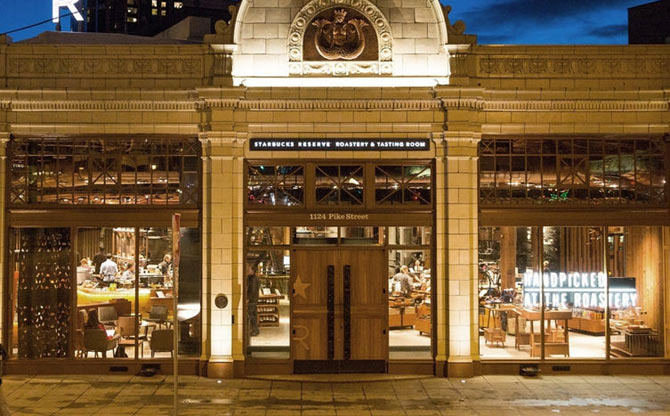
This feels like more than just a store closure; it feels as if the company's roots are being shaken. The Reserve Roastery opened in 2014, presenting a new concept of "a space to experience coffee," creating an 'experiential flagship store' that showcased the entire coffee process rather than just selling drinks. Inside, roasting equipment reflected light as it operated, and the fragrant aroma of beans filled the air.
Visitors remarked, "This feels like a museum of coffee." It was a must-visit spot for travelers to Seattle and a symbol of pride for locals. Yet, that place is now gone. Customers lamented, "I never thought this place would close too." Starbucks explained it as a "decision for financial efficiency," but the fact that they closed a symbolic store next to headquarters highlights the seriousness of the situation.
Sales have increased, but profits have decreased, while labor costs and bean prices have risen, and logistics costs have become burdensome. Ultimately, the company announced a restructuring plan worth $1 billion, leading to significant store closures and workforce reductions. New CEO Brian Niccol declared, "We will rebuild Starbucks," but investors remain skeptical. While Starbucks is currently a massive empire, it is also true that this empire is shaking.
Industry experts do not view this situation as merely the closure of a struggling store. The North American market is already saturated. More than half of the 40,000 stores worldwide are concentrated in the U.S. and China, and especially in major cities, the over-saturation of Starbucks is severe, with one on nearly every block. With an abundance of coffee but slowing consumption, and rising prices and rents, profitability is bound to decline.
However, raising prices further would drive customers away, and maintaining them is not financially feasible. It is truly a dilemma. The reactions of Seattle citizens are also complex. The Reserve Roastery was not just a café; it was a symbol that made Seattle the 'City of Coffee.' With its disappearance, a significant sense of loss is inevitable, as it served as a date spot, a backdrop for travel photos, and a source of local cultural pride.
One citizen remarked, "This feels like more than just a store closure; it feels like a collapse of Starbucks' identity." The company announced plans to remodel over 1,000 stores to transform them into "warmer and more comfortable spaces" to overcome the crisis. However, public reactions are lukewarm. How sincere does it sound to say they will create "warmer spaces" while closing a symbolic store next to headquarters? It seems more like a restructuring for the sake of numbers. In fact, the coffee market itself has changed.
Consumers now seek local cafés with personality and stories rather than large franchises. They desire an atmosphere that can only be felt here rather than the same taste found anywhere. Starbucks once touted itself as "the third space of everyday life," but that philosophy has faded in the face of efficiency and profit numbers. The extinguishing of the Seattle Reserve Roastery is not merely the end of a store.
It appears to be a symbolic scene questioning the future of the brand. After the doors of a space once filled with the aroma of coffee closed, what comes to people's minds is not warm memories but cold calculations. What Starbucks needs to reconsider now is not the numbers but the emotions of people. More important than the aroma of coffee is the 'warmth of the space' shared over that cup, a lesson this closure quietly reminds us of.







 newyorker 101 |
 PPAP Pineapple Pen |
 Things to Do to Buy a House |
 International Court |
 NYC saladbar |
  vexo90 |
  As Always Today |
  veltar87 |
  United States National Administrative Organization Stories |
  springwaltz |
  dense |
  Tiger Milk Foam Research Institute |
  Oreore Mushroom |
  optimistic |
  Good Good |
  berion88 |
  bravo777 |
  skyblue |
  Project Tomorrow |
  apricotla |
  Soy Angelino |
  nati8 |
  NE Hodori Preik |
  washington mom |
  celtics |