
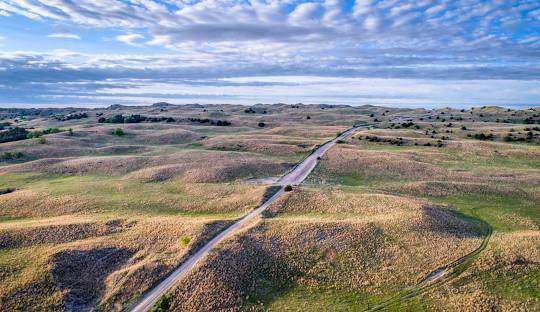
Nebraska was originally the land of Native American tribes such as the Ponca, Omaha, and Lakota, whose cultures and traditions form the roots of the region.
In 1803, it became part of the United States through the Louisiana Purchase, and later the Lewis and Clark Expedition explored the area. From the early 19th century, migration routes like the Oregon Trail and California Trail played a significant role for pioneers.
On March 1, 1867, Nebraska was admitted as the 37th state of the United States, a period when agriculture and railroad development were the main driving forces of the state's economy. Today, Nebraska remains an agricultural hub, playing a vital role in corn and beef production.
One of Nebraska's political uniqueness is that it is the only state with a unicameral legislature. Since 1937, it has operated as a unicameral for efficiency, remaining a unique case in the American political system.
As of 2025, Nebraska's population is approximately 2 million. The population density is relatively low, with a balance between urban and rural areas. The capital is Lincoln, and the largest city is Omaha. The population of Nebraska is predominantly white, with about 77% being white, 11% Hispanic, 5% Black, and 2% Asian.
The median household income in Nebraska is about $72,000, which is close to or slightly above the national average.
Agriculture, finance, insurance, and technology industries are the main pillars of the state's economy, with Omaha being the center of these industries.
The traditional core of Nebraska's economy is agriculture.
- Corn: Nebraska is known as the "Cornhusker State," being one of the major corn-producing states in the U.S. Corn is used for various purposes, including livestock feed, ethanol fuel, and food manufacturing.
- Cattle: Nebraska ranks high in beef production, with a strong ranching and meat processing industry. Large farms and ranches operate throughout the state.
- Soybeans and Wheat: These two crops are also major agricultural products, exported both domestically and internationally.
The food processing industry, leveraging the agricultural base, is also a key part of Nebraska's manufacturing sector.
- Food processing plants utilize agricultural products to produce high-quality goods, playing an important role in local employment.
- The manufacturing of agricultural machinery and related equipment has also developed, contributing to increased agricultural productivity.
The finance and insurance industry centered around Omaha forms another pillar of Nebraska's economy.
- Omaha is famous for being the headquarters of Berkshire Hathaway. This company, led by Warren Buffett, is a global investment firm that has enhanced both Nebraska's economy and reputation.
- Major insurance companies and financial service firms also have their headquarters or branches in this area.







 selvon |
 moomoon |
  Nebraska Center Director TOP |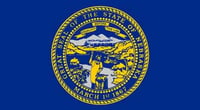
 Eagle in America for Five Years |
 Korean Mom |
  My NYC |
  moo moo |
  Mr Oh |
  forevergee |
  festival |
  manchester |
  constant |
  Leapfrog Move |
  vibranto |
  Tora Tora |
  yellowbutter |
  Dolly |
  US Embassy |
  NYC saladbar |
  Finding Superfoods |
  lightyear |
  song bang |
  vexomo |
  Indiana Jones |