
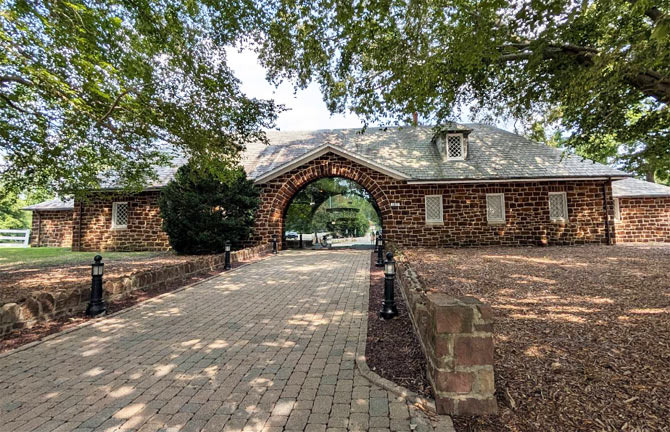
The Belair Stable Museum may initially seem small, just an old barn, when you first visit. However, once you step inside, it holds a page of Maryland's horse culture and the history of American horse racing. This place, along with the nearby Belair Mansion, is a symbolic site of Bowie, and was part of the Belair racetrack farm that has been around since the 18th century.
At that time, the Belair farm was one of the oldest horse racing-related farms in America and a center for Thoroughbred breeding. In simple terms, it was one of the starting points of the American horse industry. Upon entering the entrance, the classic stable building, harmonizing red bricks and white wood, catches the eye. The building itself was rebuilt in 1907 and retains almost the original structure of the 18th-century farm. When you open the stable door and step inside, you can see the saddles, horseshoes, and carriage equipment used at the time, and the stalls where actual horses stayed are preserved as they were.
There is a mix of the smell of wood and a hint of earth, which gives a natural feeling of returning to the past. Among the exhibits, the most impressive was the stories of the famous racehorses born at the Belair farm. Notably, the names 'Gallant Fox' and 'Omaha' stand out, both legendary racehorses that won the 'Triple Crown' in American racing history. It is hard to believe, but both of these horses were born here at the Belair farm.
It is almost miraculous that two Triple Crown winners came from the same farm. The exhibition panels detail the racing photos from that time, the lineage of the horses, training records, and the story of the farm owner William Woodward. He is regarded not just as a horse owner but as a figure who developed American horse racing culture. Additionally, you can see materials like journals, letters, and newspaper articles from the time, which give a glimpse into the social atmosphere and aristocratic culture of that era.
As you view the exhibits, it feels like you are reading not just a 'story about horses' but also the history of American industry, culture, and sports. There is also a corner showing the daily lives of the Belair farm staff. There are work clothes, hand tools used by the grooms, and black-and-white photos capturing the daily life of the farm, vividly conveying the realistic scenery of that time. Many family visitors came with children, and most of the kids were happily exploring by touching the saddles or horseshoes. The museum staff are friendly and provide detailed explanations. Occasionally, they offer free guided tours, which are much more understandable when viewed in conjunction with the Belair Mansion.
The Belair Stable Museum may be small, but it is very well maintained. The interior is clean and the lighting is soft, making it great for taking photos, and the walls inside the stable neatly display the timeline of the Belair farm. The external garden is quiet and peaceful. The red brick building stands out vividly on the green grass, and the surrounding trees sway in the wind, making a serene sound. Visiting in spring or autumn offers perfect weather for a stroll. Above all, the entrance fee is free. Managed directly by Bowie City, it is accessible for both local residents and travelers without any burden.
The Belair Stable Museum is not just a simple exhibition hall but a symbol that showcases the identity and pride of the city of Bowie. If you plan to travel to Bowie, I highly recommend visiting it along with the Belair Mansion.







 maryland park |


 strawberry |
  Korean Mom |
  My NYC |
  moo moo |
  Mr Oh |
  forevergee |
  festival |
  manchester |
  constant |
  Leapfrog Move |
  vibranto |
  Tora Tora |
  yellowbutter |
  Dolly |
  US Embassy |
  NYC saladbar |
  Finding Superfoods |
  lightyear |
  song bang |
  vexomo |
  Indiana Jones |