

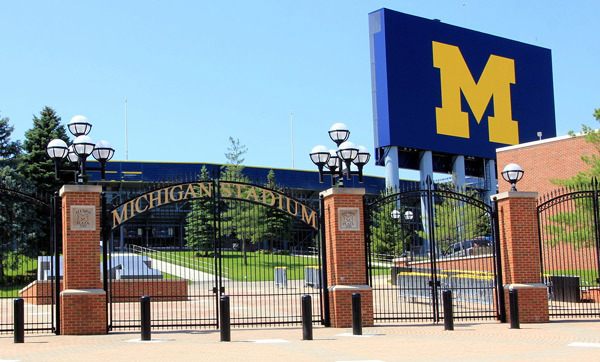
Michigan Stadium is located just south of downtown Ann Arbor, right next to the University of Michigan campus.
Locals simply call it "The Big House." With a capacity of about 107,000, it ranks among the largest stadiums in the United States and the world.
When the football season starts, this quiet college town's population can double in a day. On game days, all of Ann Arbor is painted in yellow and blue, the colors of the University of Michigan.
This stadium first opened its doors in 1927. At that time, it had a capacity of around 70,000, and people were already amazed that such a large stadium existed. After several expansions and renovations, it has reached its current enormous size.
Interestingly, from the outside, it doesn't look as big as it actually is. Most of the stadium is built into the ground, so only about half is visible from the outside.
However, once you step inside, a massive oval-shaped seating area unfolds endlessly, and the central grass field opens up before your eyes. When the stands are filled with fans, it becomes one of the most astonishing sights on Earth. I believe it will be an incredible experience.
The facilities are also top-notch. Not only football games but also concerts, hockey games, and even soccer matches have been held here.
In 2014, Manchester United and Real Madrid played a friendly match, drawing a crowd of 109,000, setting the record for the largest attendance at a soccer game in the U.S. The stadium is fully equipped with VIP lounges, press rooms, locker rooms, and media centers, and during a major renovation in the 2010s, the scoreboard, sound system, and accessibility features were all upgraded to the latest standards.
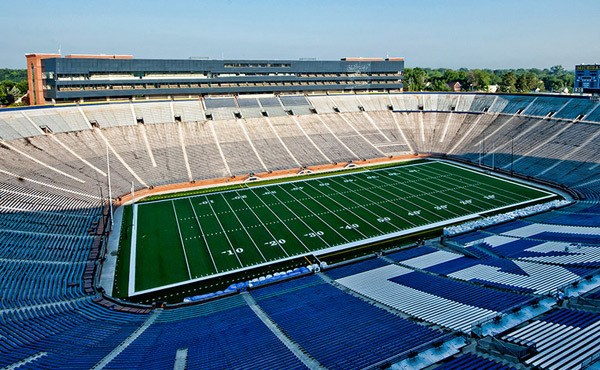
Michigan Stadium is a symbol of identity for students, alumni, and local residents of the University of Michigan.
On fall weekends, people flock from outside the city to set up tents on the campus lawn, barbecuing while waiting for the game.
This is called a "Tailgate Party," and many say this time is even more enjoyable than the game itself. Everyone wears hats or jackets with the Michigan logo, and the scene of people shouting "Go Blue!" feels like a symbol of American college sports.
Next to the stadium, there are other athletic facilities of the University of Michigan. The Chrysler Center is where basketball games are held, and next to it are baseball fields, a track, and various other facilities. Notably, the locker room for the Michigan football team is almost at a professional level, equipped with personal spaces for players, recovery rooms, and analytics systems.
The reason Michigan Stadium is special is not just its size. When you go to a game, the energy and cheers of the crowd resonate throughout the entire city. The school fight song, "Hail to the Victors!" sung by the crowd simultaneously, sounds majestic like a flag-raising ceremony.
Players draw strength from this sound, and alumni feel pride in being graduates of this university when they hear it.
In winter, the snow blankets the stadium in silence, but come spring, the grass comes back to life in green, and in summer, graduations are held. The University of Michigan's graduation ceremonies always take place here, and the sight of over 100,000 family members and graduates gathering to celebrate is truly moving.
Ultimately, I believe Michigan Stadium is not just a building but a symbol of the University of Michigan and the city of Ann Arbor.
On days when the stadium is full, it begins to beat like a giant heart. That heart is called "The Big House."




 saffronroute |
 rosem |
 crumb |

 mygoddess blog |
  laro90 |
  MEDBIO American Doctor Blog |
  SWAT TEAM BLK |
  DREAM BIG |
  frostbite |
  330 Forever My Love |
  El Dorado |
  dralix58 |
  Gorama Round |
  Skydiving |
  dreamport |
  Yellow Snowman |
  Toaster Pizza Magic Show |
  velvetnom |
  Anytime Journey |
  Mrs. Duluth |
  jaxter |
  Atlanta Mama |
  Baguette Blog |
  Tan Sol |