

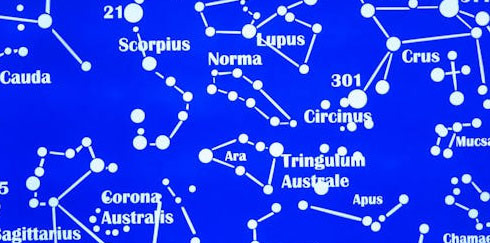
When you look at the night sky, it may all seem the same, but the constellations visible in America vary slightly depending on where you are.
Even within the same country, the stars you see differ based on whether you live in the north or south, or at a low latitude like Hawaii, and the sky changes with the seasons. In simple terms, star observation is all about "where and when you look."
For example, if you live in the northern part of the U.S., the northern hemisphere constellations around the North Star are more distinct, while in the south or places like Hawaii, you can catch a glimpse of some southern constellations as well. This is why the night sky feels different in various regions.
As the seasons change, the visible constellations also change. Stars visible in the summer disappear in winter, and there are constellations that only appear in winter. So, to enjoy it, planning like "Where should I go to see them tonight?" is essential.
Constellations are not just pictures floating in the sky; they are historical artifacts that humanity has observed, recorded, and assigned meaning to for a very long time. The first constellation system was created by the ancient Sumerians 5,000 years ago, linking the stars to gods and laying the foundation for astronomy. The patterns they created became the roots of many constellations we know today.
Later, the Greeks organized these constellations more systematically. Astronomers like Hipparchus and Ptolemy recorded the movements of stars and planets, creating something akin to a "constellation textbook," and Ptolemy's book 'Almagest' spread throughout medieval Europe, serving as a standard in astronomy.
The ancient Egyptians also actively utilized constellations, using the sky as a farming calendar. They assigned mythological meanings to constellations like Orion and used them to predict floods and farming seasons. The same goes for China, which developed its own astronomical system long ago, recording stars in various categories and continuing that tradition to this day.
Throughout different eras and regions, the uses and interpretations of constellations varied. They served not just as a way to look at the sky, but also played roles in faith, science, navigation, and agricultural calendars. In modern times, constellations have again become a "reference point for observation." The twelve zodiac constellations we use today ultimately inherit the traditions of ancient Greece and Rome, based on the path of the sun, known as the ecliptic.
Now, constellations are not only seen as tools for fortune-telling but also serve as important reference points for space exploration. When the Hubble Telescope takes pictures, it uses constellations as coordinates, and NASA and other agencies utilize these constellation coordinates to explore space.
Ultimately, constellations have been a timeline, a myth, and now serve as a map for venturing into space, living alongside humanity since ancient times.
So, wherever you choose to look at the stars tonight, it is an experience that connects you to a very old story and science.





 Weekend Movie Blog |
 Beauty, Health, Lifestyle Blog |
 coloradoman |
 Superman Cat Blog |
 novapixel |
  Korean Mom |
  My NYC |
  moo moo |
  Mr Oh |
  forevergee |
  festival |
  manchester |
  constant |
  Leapfrog Move |
  vibranto |
  Tora Tora |
  yellowbutter |
  Dolly |
  US Embassy |
  NYC saladbar |
  Finding Superfoods |
  lightyear |
  song bang |
  vexomo |
  Indiana Jones |