

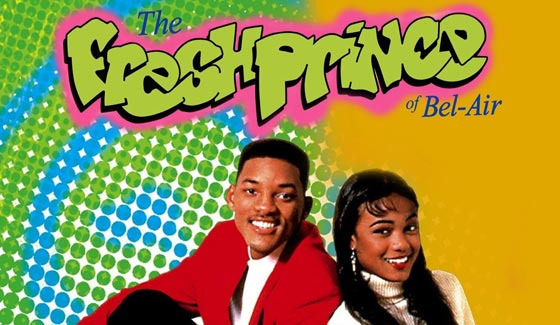
What I remember most vividly about the changes in the city of Philadelphia is the sitcom The Fresh Prince of Bel-Air, which accompanied me through my late teens.
These days, young people might first think of Will Smith as the actor who slapped Chris Rock at the Academy Awards, but to my generation, he was not initially a 'Hollywood superstar.'
Back then, Will Smith was a young man from Philadelphia who made us laugh out loud while sitting on the couch and sometimes tugged at our heartstrings.
I first saw this sitcom in the early 90s. The premiere aired on September 10, 1990, so while I may not remember exactly, the feeling of sitting in front of the TV after school is still vivid.
When the opening song starts with "Now, this is a story all about how~", my parents would chuckle, and my younger brother would dance along like Will. Our family wasn't well-off, and we were an ordinary household in East Philadelphia, but perhaps because of that, the stories Will experienced in Philadelphia and his awkward life starting with his wealthy relatives in Bel-Air didn't feel entirely foreign.
Especially, that setting was very much in touch with reality. Will was an ordinary black teenager who played in West Philadelphia. When he got involved with some troublemakers while playing basketball and it became dangerous, his mom sent him to the affluent Bel-Air. Although the distance is about 4,300 km, the cultural gap between Philadelphia and Hollywood in LA felt like it was hundreds of thousands of kilometers apart at that time.
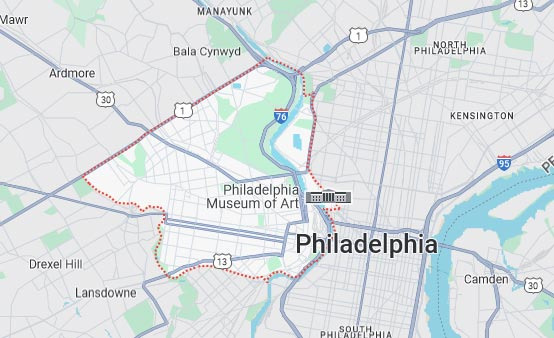
Bel-Air was one of the wealthiest neighborhoods in America, and the uncle he met there was a successful lawyer, while his cousins had a style completely different from what Will considered to be 'black.' This made for a compelling drama. The interactions between the eastern and western cousins were often awkward and filled with conflict.
At that time, there hadn't been a sitcom depicting wealthy black families since The Cosby Show, so the very presence of it was refreshing and provided a strange stimulus and shock to ordinary black families.
However, this drama didn't simply deal with the contrast between the rich and the poor. On the surface, it was a sitcom full of laughter, but underneath, it contained realistic issues faced by the black community. Topics like discrimination, identity, generational differences, and economic opportunities were woven into the narrative. Behind Will's playful demeanor, those concerns were always subtly present, and that message resonated with us as children. While we laughed without a second thought, looking back, we unconsciously learned quite a few educational messages.
In particular, the difference between Will and his cousin Carlton was very symbolic. Will, who was accustomed to street culture, and Carlton, who was conservative and a model student. Their clashes, while ultimately leading to understanding and learning from each other, left a significant impact on teenagers like me growing up in Philadelphia. It was a story that overturned the fixed notion of "this is how black people should live," showing that despite different paths and backgrounds, we could ultimately become one community.
Looking back, this drama means more to me than just a simple memory. It was another 'our story' experienced by a 50-year-old man living in Philadelphia through the TV, where I laughed, empathized, and sometimes imagined a future. Even now, when I occasionally hear the opening on YouTube, it feels like the melody brings back the air of childhood Philadelphia.







 Northeastern |
  Nationally Certified Lightning Charcoal Review |
 sparkling |
 American Grape Shine Muscat |
 U.S. Weather Bureau News |
  US Embassy |
  Korean Mom |
  My NYC |
  moo moo |
  Mr Oh |
  forevergee |
  festival |
  manchester |
  constant |
  Leapfrog Move |
  vibranto |
  Tora Tora |
  yellowbutter |
  Dolly |
  NYC saladbar |
  Finding Superfoods |
  lightyear |
  song bang |
  vexomo |
  Indiana Jones |