

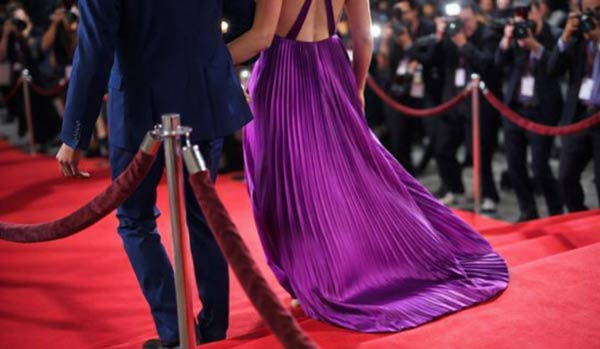
These days, whenever I turn on the news in Korea, I see controversies surrounding celebrities' character, drunk driving, bullying allegations, and abuse of power. Honestly, it's really exhausting to watch.
In the past, it was enough to say, "As long as they act well," or "As long as they sing well," but now these issues can completely ruin a person's career. Strangely, this phenomenon is particularly pronounced in Korea, and there are reasons for it.
First of all, since the 1990s, celebrities in Korean society are not just entertainers. They are treated as semi-public figures.
The public believes that the wealth and fame enjoyed by celebrities are ultimately created by their money and attention. Therefore, it is entirely natural to demand a corresponding level of morality. In the U.S. or Europe, there is a degree of separation between a person's work and private life, but Korea is different. The remnants of Confucian culture are still strong. No matter how talented someone is, if their character is lacking, there is a sentiment in society that resents that person receiving the spotlight.
Moreover, it is now impossible to hide. In the past, agencies would cover things up, the media would bury stories, and rumors would end as rumors. Now, it's different. Smartphones, social media, and communities store all memories. Someone's past can be recalled at any time, even after 10 or 20 years. Especially the bullying issue clearly shows how sensitive Korean society is to cause and effect. The moment it is revealed that a successful celebrity was a perpetrator in the past, the public feels betrayed and immediately turns their back. The speed of this reaction is something even corporate crisis management teams cannot keep up with.
On top of this, the bomb of 'abuse of power' adds to the situation. Korean society now upholds fairness and equality as if they were a religion. If stories come out about a celebrity verbally abusing staff on set or treating their manager like a personal assistant, it's just over. The atmosphere is no longer one where people laugh it off as "celebrity syndrome." The public no longer sees celebrities as a privileged class. When news of abuse of power breaks, society as a whole becomes enraged.
The problem lies in the gap between the image created by the entertainment industry and the actual human being. The Korean entertainment industry makes money by selling an image of being kind, upright, and approachable. Advertisers buy that image, and fans consume it. However, when the actual reality is revealed to be completely different, the public becomes furious. The feeling of "I was deceived" outweighs the importance of acting skills. As of 2026, the public prioritizes authenticity above all else. They can overlook someone who is a bit lacking but are very harsh on those who pretend to be good while acting differently behind the scenes.
The fandom has also changed. In the past, fans would unconditionally support their idols. Now, fans are quick to calculate. They understand that holding onto a star with character issues can ruin the image of their entire fandom. Therefore, they demand apologies first and withdraw their support. The standards of self-management required of celebrities are incomparable to those of the past.
Now, in Korea, a celebrity's character is not a choice but a necessary qualification. While acting skills or singing ability can be compensated for with technique, the attitude and atmosphere that come from a person cannot be manipulated. The increase in character controversies indicates that society has become more transparent. Living decently not just in front of the camera but also behind it is perhaps the most important specification in the current Korean entertainment industry.





 Egg Steamed Pot |
 novapixel |
 xylora |
 vegas mom |
 Coco and Lulu |
 U.S. Weather Bureau News |
 Choco Choco Star |
 Exploring American Life Information |
 Conflite Teacher |
 US Home Buying Information Home Insurance |
  forevergee |
  festival |
  manchester |
  constant |
  Leapfrog Move |
  vibranto |
  Tora Tora |
  yellowbutter |
  Dolly |
  US Embassy |
  NYC saladbar |
  Finding Superfoods |
  lightyear |
  song bang |
  vexomo |
  Indiana Jones |
  meloncat |
  mortrix |
  Esther 1983 |