

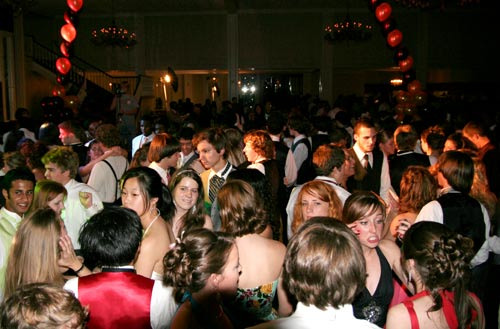
In the spring of 1995, as my high school graduation approached, honestly, prom was a somewhat uncomfortable event.
At that time, prom felt like a game to find a romantic partner. Who you went with was a measure of popularity, who called the limousine, whose dress was more extravagant, and the main playlist featured groups like New Kids on the Block or Boyz II Men, while during slow dances, we had to heed our parents' advice to maintain a minimum distance of 15cm between our backs.
Perhaps that's why my Asian male friends around me were very cautious. When prom season came, most of them cautiously approached only Korean girls. It was like an instinct to solve things safely within our cultural sphere.
I was the same. I nervously asked a particularly quiet Korean girl with long hair through a note, "Would you like to go to prom?" At that moment, I felt like my heart was about to leap out, but that was the only way I could do it.
However, the Korean girls had a different vibe compared to guys like us. Honestly, I saw pretty Korean girls who spoke English well being asked to prom by white, Hispanic, and Black guys, as well as star players from the football and basketball teams.
Looking back now, it wasn't just a simple matter of romantic feelings. It was a complex issue intertwined with 'identity', 'race', 'belonging', and 'self-esteem'. At that time, we felt somewhat like outsiders, digesting prom within our own culture.
While my white friends lived out a romantic, movie-like prom experience, we felt like we were quietly watching the stage lights from behind the scenes.
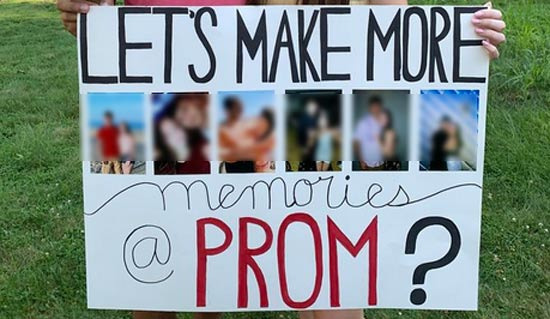
Nowadays, prom proposals for late millennials are said to be completely different.
It has moved beyond "Would you go to prom with me?" to an era of "Shall we go to prom together?" It's not centered on romantic partners or couples, but rather on 'my own style'. Attending prom without a date is no big deal, and it's common for groups of 5-6 friends to form 'platonic prom packs' and go together.
In short, the 'aesthetic of playing alone' has infiltrated prom as well. Some students even hold "anti-prom parties" instead of going to prom. This connects to sensitive political issues. For example, some schools have introduced 'gender-neutral' dress codes, and some students have shown up in drag queen outfits instead of suits, becoming social media stars.
The music has changed too. Instead of the R&B ballads we were into, now the main playlist features hits from TikTok. It's less about "Let's dance!" and more about "Let's film this and post it on Snapchat!" It's an era of dancing less and filming more. Perhaps the focus of prom has shifted from 'the other' to 'oneself'.
Fashion has evolved as well. Back in our day, it was almost a rule that boys wore tuxedos and girls wore long dresses, but nowadays, people wear what they want. Boys might show up in pink suits with pearl makeup, and girls might rock suits and ties instead of dresses. It's a prom that showcases style that is 'true to my standards' rather than conforming to someone else's criteria.
Another interesting change is in prom proposals. Back in the 90s, it was just about secretly handing over a card and a single rose, but nowadays, prom proposals are almost like mini music videos. Balloons, banners, flash mobs, and even live broadcasts on YouTube are common. However, even if those extravagant proposals are rejected, today's kids brush it off as 'just creating content', which is quite different.
Sometimes when I talk with my son, I feel that today's prom is much more free, diverse, and honest than the one I experienced. Of course, some might lament that 'tradition has disappeared', but it has become a platform for individual students to express themselves, and it remains an event that is remembered as "a scene from life" in some form.
In conclusion? Prom still exists. It has simply evolved from 'a couple's ball' to 'a showcase of individuality'.
If I could go back to being a high school student now? I think the era has come where Asian males can also be the protagonists of prom dates and prom romances. With K-pop, K-dramas, and Asian content gaining global attention, I find myself envious of this change. I once wanted to be 'the Asian male lead who stands out at prom'.
What can I say, the courage and confidence we didn't know back then have naturally seeped into this generation.


 Magic Cabbage School of Martial Arts |
 Vacation on Hawaii |
 morvex37 |
 Ari Songhan American Immigration Life |
 Bearded Strawberry Smoothie |
 Pirate Ship Popcorn Maker |
 Total Beauty |
 Baguette Blog |
 California Information News |
 ROLDU WAY |
  dralix58 |
  Gorama Round |
  Skydiving |
  dreamport |
  Yellow Snowman |
  Toaster Pizza Magic Show |
  velvetnom |
  Anytime Journey |
  Mrs. Duluth |
  jaxter |
  Atlanta Mama |
  US Embassy |
  Korean Mom |
  My NYC |
  moo moo |
  Mr Oh |
  forevergee |
  festival |
  manchester |