

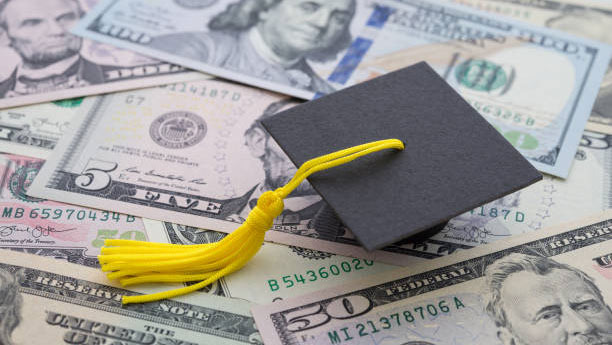
Having graduated from Cornell's Economics Department and completed my MBA, I still feel heavy-hearted every month when I see the student loan bills coming in.
At first, I believed it was an investment in my future, but now in my mid-30s, I feel every day how long that 'investment' casts a shadow over my life.
When I enrolled, the undergraduate tuition at Cornell was about $45,000 per year.
Including dormitory fees, food costs, and textbook expenses, the actual living expenses amounted to around $60,000 to $65,000.
Now, due to inflation, it is much higher, but even over a decade ago, it was a significant burden.
After my divorce, I couldn't seek help from my father, who was living alone, so I applied for a Federal Student Loan.
The typical loans available for undergraduates are the Direct Subsidized Loan and the Direct Unsubsidized Loan.
However, the annual limit for these two loans is only about $5,500 to $7,500, which was far from enough to cover the full tuition.
The shortfall had to be filled with Parent PLUS Loans or Private Loans, but since my parents couldn't support me, the proportion of private loans increased significantly. Tuition was not the only issue. Rent, textbook costs, insurance, and transportation expenses piled up every semester.
I received scholarships and grants, but they were insufficient, and I ultimately chose private bank loans.
Private Loans had higher interest rates and stricter repayment conditions. Looking back now, I think I signed too easily, using 'my future self' as collateral in my early 20s.
After finishing my undergraduate degree in economics, I immediately entered the Cornell MBA program. This is where the real debt began.
The MBA tuition was about $65,000 per year at that time, and with dormitory living expenses, it exceeded $80,000 a year.
Since it was a two-year program, the total cost easily surpassed $160,000. This amount still makes me struggle today.
Graduate students typically cover most of their tuition and living expenses through Graduate PLUS Loans. Theoretically, you can borrow almost the full amount needed.
I ended up borrowing about $140,000 to $150,000 over the two years. At the time, I thought, "Once I get a good job after graduation, I can pay it off quickly," but reality was not that simple.
In the U.S., student loans have a six-month grace period after graduation. However, after that, repayments begin every month. Initially, I had to pay about $1,200 to $1,400 monthly under the Standard Repayment Plan. Even though I was fortunate to have a relatively high starting salary, considering the cost of living in New York, it felt overwhelming.
Eventually, I switched to Income-Driven Repayment (IDR), where I only had to pay a certain percentage of my income. As a result, my monthly payment decreased to about $600 to $800, but the repayment period extended to over 20 years, and the total repayment amount became much higher than the principal.
For federal loans, if you consistently pay based on IDR for 20 to 25 years, the remaining balance is forgiven. However, that forgiven amount is considered income, so you have to pay taxes on it. Private Loans are harsher. Extensions are difficult, and even bankruptcy usually does not forgive them. Therefore, student loans are often referred to as a "lifetime shadow."
I am still paying over $800 a month. I graduated with about $180,000 to $200,000 in debt from both my undergraduate and MBA programs, and even after eight years of repayment, more than half remains.
Even with a stable job, seeing the monthly loan payments makes me wonder, "When will I truly be free?"



 newyorker 101 |
 Things to Do to Buy a House |
 U.S. Weather Bureau News |
 International Court |
 NYC saladbar |
  Tonky |
  viroma |
  cookie |
  Live and that's it |
  Alright Twain |
  eatontown blog |
  HAWAII Korean Church News |
  Amore |
  linex |
  Balancework |
  laro90 |
  MEDBIO American Doctor Blog |
  SWAT TEAM BLK |
  DREAM BIG |
  frostbite |
  330 Forever My Love |
  El Dorado |
  dralix58 |
  Gorama Round |
  Skydiving |