
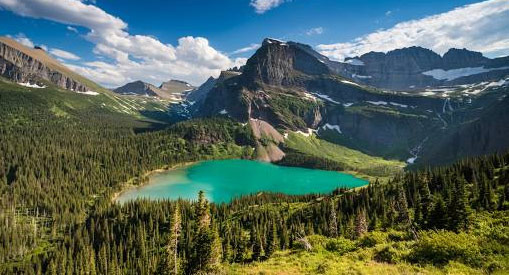
Glacier National Park offers important lessons on history, geology, and climate change beyond just enjoying nature.
Visitors can experience the natural beauty through various activities such as hiking, camping, kayaking, and stargazing.
Location and Overview
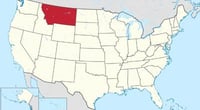
Glacier National Park is located in the northwest of Montana, USA, bordering British Columbia and Alberta in Canada. The park boasts an area of about 1 million acres (4,000㎢) and features diverse terrains and ecosystems, including 25 glaciers and over 130 lakes. It is famous for its majestic and beautiful scenery, often referred to as the "Crown of the Continent."
History
1. Land of the Indigenous People
The Glacier area has been home to Native Americans for about 10,000 years. The Blackfeet, Salish, and Kootenai tribes have lived in harmony with nature in this region. The Blackfeet tribe regarded this area as "sacred land," and their culture and traditions remain around the park today.
2. Designation as a National Park
In the late 19th century, explorers and settlers began to discover the area's wondrous nature, attracting tourists. Particularly, the completion of the Transcontinental Railroad in 1891 improved access to the region. Tourists arriving by train were captivated by the beauty of the glaciers and mountains, raising the need for conservation.
On May 11, 1910, the Glacier area was officially designated as the 10th National Park in the United States. From the beginning, the protection of the natural ecosystem, including glaciers, lakes, and wildlife, and recreation for visitors were set as primary goals.
3. International Peace Park
In 1932, Glacier National Park was combined with Canada's Waterton Lakes National Park to create the Waterton-Glacier International Peace Park. This was the world's first international peace park, symbolizing cooperation between the United States and Canada and designated as a UNESCO World Heritage Site.
Nature and Terrain
1. Glaciers and Mountains
The name of Glacier National Park is derived from the glaciers that formed this area thousands of years ago. Currently, due to climate change, the park's glaciers are rapidly diminishing, with fewer than 25 remaining from over 150 originally.
2. Wildlife
The park is home to a variety of wildlife, including grizzly bears, gray wolves, cougars, and elk. Notably, the park's biodiversity is unique in the United States and is often referred to as a birdwatcher's paradise.
3. Major Attractions
- Going-to-the-Sun Road: Opened in 1932, this road runs through the heart of the park and offers fantastic views.
- St. Mary Lake and Lake McDonald: Known for their crystal-clear waters, these are the park's representative lakes.
- Hidden Lake: A popular spot accessible by hiking, offering serene landscapes and wildlife viewing.
Glacier National Park is one of the places directly experiencing the effects of climate change. The rapid decline of glaciers observed since the early 20th century is cited as a major example of the seriousness of global warming. The park is making various efforts for sustainable tourism and natural conservation.






 Childbirth Drabble Blog |
 tarvion |

 velaro |
 soonee |
  manchester |
  constant |
  Leapfrog Move |
  vibranto |
  Tora Tora |
  yellowbutter |
  Dolly |
  US Embassy |
  NYC saladbar |
  Finding Superfoods |
  lightyear |
  song bang |
  vexomo |
  Indiana Jones |
  meloncat |
  novapixel |
  mortrix |
  Esther 1983 |
  fortbliss |
  Moscow Kim |