

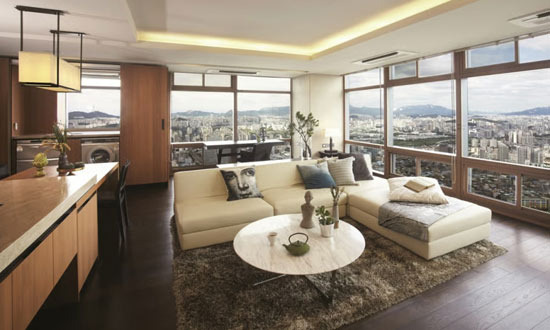
Recently, the hotel-style silver towns being discussed in Seoul differ significantly from the old image of "nursing homes."
The key points are twofold. First, the quality of living is elevated to that of a hotel. Second, medical care and assistance are not just "options available when needed" but are established as "basic infrastructure." Therefore, for residents, it feels more like switching living systems than just moving homes.
The first noticeable aspect of hotel-style silver towns is the space and operational methods. Many have lobbies and lounges, and concierge desks are common. Services such as package delivery, vehicle reservations, visitor reception, and laundry are handled at the front desk. Rooms can be fully equipped with kitchens like regular apartments or limited to mini kitchens for simple cooking.
This difference is not merely a matter of preference but is connected to operational philosophy. The more meals are centered around community dining, the more the kitchens are reduced, and the communal dining and meal system are strengthened. Conversely, those who prefer to live quietly alone tend to favor full kitchen types.
The meal system is where the term "hotel-style" is most evident. Meals are often served buffet-style at set times or through a menu selection. Nutritionists are frequently involved, and adjustments can be made for low-sodium or diabetic diets.
Here, an important point arises. It is rare for hotel-style establishments to serve only extravagant food. Rather, since long-term residency is assumed, the key is a menu cycle that prevents monotony and reflects individual health conditions. The taste is akin to that of a hotel, while the management resembles hospital-grade dietary control.
The term "medical staff on-site" actually involves different levels. While some facilities have doctors present, it is more common for nursing staff to be on-site, with doctors visiting in a consulting capacity through partnerships with local hospitals. Therefore, what needs to be checked is not just the term "on-site" but which medical personnel are present at what times and how they respond at night. Regular checks of vital signs such as blood pressure, blood sugar, and temperature, as well as whether medication management is systematized, can make a difference.
Medication management is a practical point of hotel-style silver towns. A common issue in elderly care is related to medications. Problems arise when medications are not taken on time, are duplicated, or when prescriptions change but previous medications continue to be taken. Therefore, well-managed facilities operate with a set of processes that include medication reminders, management of packaging units, reflecting prescription changes, and sharing information with family or caregivers. Simply put, whether or not a nurse is present is often less important than whether medications are managed systematically.
Another aspect of hotel-style operations is housekeeping and safety. Cleaning, linen changes, and hygiene checks are conducted regularly, and common areas are managed like hotels. However, this also leads to the establishment of rules. For example, furniture arrangements in homes must meet safety standards, and non-slip mats are recommended. Falls are the most sensitive risk in silver town operations, so aspects like flooring material, threshold treatment, handrails, lighting, and emergency bell locations are meticulously designed. For users, this may feel like "being interfered with," but such interference ultimately serves to reduce accidents.
Moreover, many overlook the social system aspect. The comfort of hotel-style silver towns comes not only from services but also from a structure that reduces loneliness. Various communal programs are actively organized. Schedules for exercise, rehabilitation, hobbies, lectures, movie nights, walking groups, and health seminars are continuously held. Importantly, participation is not forced, but the doors are always open for those who wish to join.
In terms of costs, there are structures where the entrance deposit exceeds 800 million won, with relatively low monthly fees, and others that lower the deposit burden while raising monthly fees to over 6 million won. As the hotel-style increases, the number of services included in the monthly fee grows, and additional charges often apply based on health conditions.
The key here is not the price list but the conditions list. Details of operations such as the number of meals included, cleaning frequency, scope of nursing services, night response, emergency transport criteria, whether hospital accompaniment services are included, and whether rehabilitation programs are part of the offering determine actual value.
In conclusion, hotel-style silver towns in Seoul are evolving into a model where housing, hotel operations, and medical care and assistance coexist within a single building. It is indeed becoming more comfortable. However, that comfort arises more from the completeness of the operational system than from the luxury of the space.
Therefore, rather than deciding based solely on appearances, I believe it is safer to check the actual working structure of medical personnel, medication management methods, night responses, the scope of included services, and what factors contribute to rising costs.





 sparkling |
 oh my salami |
 saffronroute |
 You Only Live Once |
 Texas Real Estate Blog |
 Pirate Ship Popcorn Maker |
 Total Beauty |
 OC Real Estate Business Information |
 Story Bank |
 California Information News |
  vibranto |
  Tora Tora |
  yellowbutter |
  Dolly |
  US Embassy |
  NYC saladbar |
  Finding Superfoods |
  lightyear |
  song bang |
  vexomo |
  Indiana Jones |
  meloncat |
  novapixel |
  mortrix |
  Esther 1983 |
  fortbliss |
  Moscow Kim |
  My Two Way |
  toastyfox |
  FLORIDA Acus |