
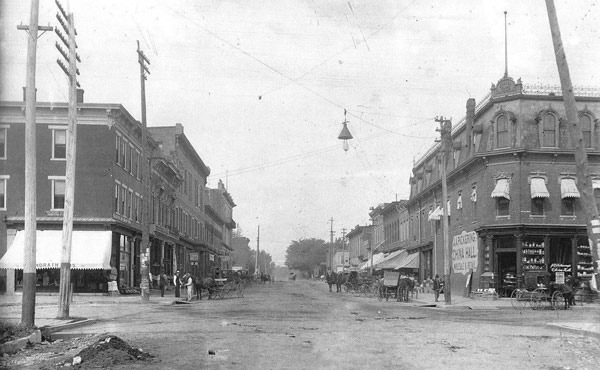
The Iowa City of the 1920s was much more rugged than the sophisticated atmosphere of the college town we know today, yet it was a time filled with the spirit of change.
The downtown area was not lined with cafes and bookstores as it is now, but rather served as a crossroads where rural and urban life met.
Although the university already occupied the center of the city, its influence was not as absolute as it is today, and the downtown was a vibrant living space where commerce, markets, transportation, and residences intertwined. Iowa City in the 1920s was a small city, but it was considered quite 'progressive' among midwestern small towns, rapidly embracing new culture, education, and industry.
When envisioning the downtown landscape, one can picture streetcars running alongside horses and cars in a transitional scene. As electric streetlights began to be installed, the streets gradually brightened at night, and along North Downtown, grocery stores, butcher shops, bakeries, pharmacies, and hardware stores lined the streets.
The buildings were not significantly different from the old brick structures that still exist today, mostly consisting of 2-4 story commercial buildings where the first floor was used for shops and the upper floors for residential space. Some of these have been remodeled into student apartments or cafes that remain today. As the city grew rapidly, local merchants and immigrants were opening their own shops and establishing themselves, making the downtown a place rich with economic vitality and a sense of community.
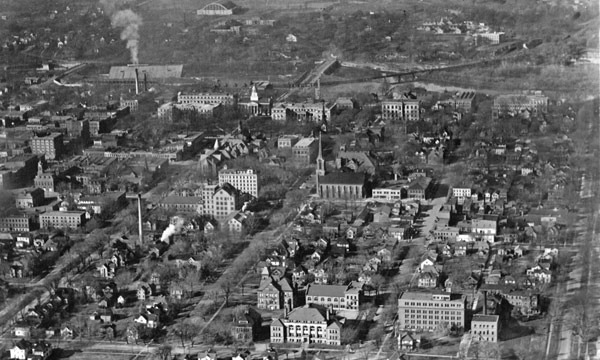
One cannot describe Iowa City in the 1920s without mentioning the atmosphere of Prohibition. Iowa was one of the regions that strongly enforced prohibition policies, but not everyone followed the rules.
Some restaurants and homes in the downtown secretly produced or sold alcohol, and there were quite a few 'speakeasy' style private bars that engaged in a game of cat and mouse with the police. It is said that some of the old buildings still have secret entrances or hidden spaces that were used at that time. While it appeared to be a quiet college town on the surface, internally it was a city where young people and merchants experienced both change and regulation, yearning for a new culture.
The presence of the university also shook things up in the 1920s. The University of Iowa had a long history, but it began to make significant advancements in medicine, literature, and law during this decade. Particularly, as the creative writing program grew, the atmosphere that would lead to the current 'Iowa Writers' Workshop' was formed.
Medical education and hospital systems expanded, attracting students and professionals from outside the region, which led to an increase in boarding houses, restaurants, and shops catering to students in the downtown area. This was a time when the university transformed from a simple educational institution into an entity that drove the local economy.
The housing environment was also changing. As car ownership increased, residential developments began to emerge on the outskirts of the city, while the downtown solidified as a commercial center, gradually acquiring more diverse functions. Cultural industries such as small theaters, local newspapers, printing shops, and photography studios emerged, and citizens gathered around them, forming the city's identity. The reason Iowa City is now regarded as a 'small but culturally rich city' is deeply rooted in this cultural growth period of the 1920s.
The downtown of Iowa City in the 1920s was not just an old neighborhood with old brick buildings; it was a living historical space where agriculture, education, prohibition, cultural experimentation, transportation changes, and urban expansion all coexisted. Even today, walking through the downtown, one can feel the growth of the city from 100 years ago in the architecture, street layout, spacing between buildings, and brick materials.






 Iowa Egen Aunt |
 Hoorah Ooorah |
 Iowa School News |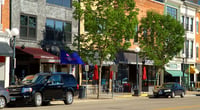
 Tonky |
  viroma |
  cookie |
  Live and that's it |
  Alright Twain |
  eatontown blog |
  HAWAII Korean Church News |
  Amore |
  linex |
  Balancework |
  laro90 |
  MEDBIO American Doctor Blog |
  SWAT TEAM BLK |
  DREAM BIG |
  frostbite |
  330 Forever My Love |
  El Dorado |
  dralix58 |
  Gorama Round |
  Skydiving |