

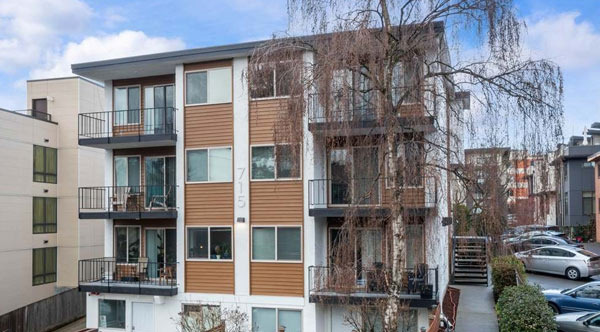
Can I buy a 12-unit apartment and retire while living in the outskirts of Seattle, USA?
This is a question I often imagine these days.
Every morning, while having a cup of coffee, I find myself thinking, "Should I start preparing for retirement?"
Looking back, I have spent 30 busy years as an immigrant, raising two children who have graduated from college and become independent, and my mortgage is almost paid off.
However, it feels a bit empty to just sit back and do nothing, and I think having a steady income would make me feel more secure.
So these days, I am particularly interested in 12-unit apartments. The housing prices in downtown Seattle are outrageous, but in slightly outer areas—Everett, Tacoma, Kent, Olympia—there are occasionally small apartments available at more realistic prices.
In the past, I would have thought, "What do I know about being an apartment owner?" but nowadays, people call this kind of thing "passive income assets" and everyone is talking about investing on YouTube.
Typically, a small apartment with 12 units would have an average rent of about $1,500 for a 1-bedroom unit. If all units are filled, it generates around $210,000 in rental income annually.
Of course, I wouldn't be buying it entirely with my own money, so after deducting loan interest, taxes, management fees, and repair costs, I would be left with about $7,000 a month. Isn't that a decent income?
However, there is one important premise: "There must be no vacancies."
And tenants must pay their rent on time, the boiler must not break down, and there must be no lawsuits over minor issues, which are very realistic problems.
In other words, this is more of a small business than an investment. Moreover, managing it directly can be stressful, and using a property management company significantly reduces profits. What if several tenants move out at the same time and the units remain vacant for two or three months? The income would disappear like snow melting away.
Still, there is definitely hope. I am 58 years old, and I still have some time left until I turn 65 and retire.
If I buy now and manage it slowly while remodeling, and attract good tenants, I could create a decent cash flow by the time I retire. Plus, real estate tends to appreciate over time, so the price I buy it for now may look very different in ten years.
The biggest advantage is that it creates a structure where "money comes in without me working."
Of course, it's not complete freedom; it might be a kind of semi-retirement where I have a bit less struggle. But isn't that something?
A life where I can wake up leisurely in the morning, enjoy a cup of coffee, and say, "Should I supervise the building cleaning today?" That is true retirement.
In conclusion, it is possible. But it is not easy.
If you think you can just buy it and relax, it will be tough, but if you have a realistic determination to "manage it, invest a bit of my life to create stable income," it is definitely worth a challenge.
At 58, it is still not too late. The perseverance and skills I have developed as an immigrant, along with the emotional intelligence gained from the tenant game, it is time to put them into one apartment.
Perhaps retirement is not in a distant land, but it may start in a 12-unit apartment located in Everett or Kent.





 vibranto |
 sparkling |
 oh my salami |
 saffronroute |
 You Only Live Once |
 Bald Eagle Brothers |
 Bacon King Blog |
 PETRO Vatican Shrine |
 Seattle - Emerald City |
 Real Estate Agent USA |
  Burbank Lee |
  Olivia's Blog |
  Bushing Around Life |
  Active |
  Cherokee Rose |
  Kor. Master |
  Holey Moley |
  Conflite Teacher |
  Hodong Prince Over Flex |
  Mist inn |
  citrus pop |
  Onion Ring |
  phoenixia |
  viewtop |
  loverun |
  Kim Do Sun |
  SEVEN SEVEN |
  yentra |
  Make My Day |
  Victory 1988 |