

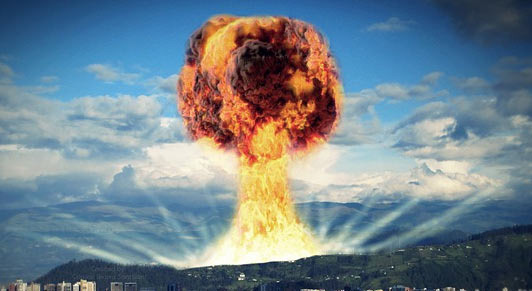
While having a beer after dinner, an American friend brought up a story about how there were 12 American prisoners who died in the Hiroshima atomic bombing that ended World War II.
Even though I have read a lot about the history of Korea and the United States over the past 40 years, I was unaware of the story of the American POWs who died in Hiroshima from the atomic bomb.
Curious, I turned on my laptop that night when I got home and began searching, only to confront a shocking truth.
On August 6, 1945, at 8:15 AM.
The American B-29 bomber Enola Gay dropped the atomic bomb 'Little Boy' over Hiroshima.
In an instant, the entire city became a sea of fire, and about 70,000 people died instantly.
In the following months, due to radiation exposure and injuries, the final death toll reached about 140,000. This number is equivalent to half the population of Seattle, where I currently live.
Many Korean laborers were forcibly brought to Hiroshima at that time. It is estimated that about 35,000 of these individuals, who were forced to work in munitions factories, shipyards, ports, and coal mines producing war materials for Japan, died from the atomic bomb. [Source]
Most of them were conscripted from Korea and transported to the Japanese mainland, and Hiroshima was a region where many Korean laborers were concentrated.
What is even more heartbreaking is that many of them did not receive proper compensation or consolation from the post-war Japanese government. Some barely survived and crossed over to the United States to start a new life, but the aftereffects of radiation exposure and mental trauma haunted them for life. Their suffering has not yet ended.
It was not only Koreans who were in Hiroshima. American POWs were also there. According to the official records I found, there were a total of 12 American prisoners held in Hiroshima at the time of the atomic bombing. They were U.S. Air Force pilots or Navy personnel who had been captured by the Japanese military and were detained in facilities or prisons of the Hiroshima military police. And on that day, they all died from the atomic bomb dropped by their own country.
Ten died instantly on the day of the explosion, while the remaining two are recorded to have died days or weeks later from the aftereffects of radiation. This information is also specified in a document prepared by the GHQ in 1948, and the U.S. Department of Defense has officially acknowledged this fact. It is said that even their families were unaware of their fate for a while. Some were recorded as 'missing' without being classified as killed in action. Isn't it ironic? The fact that they were captured by the enemy in Japan and then died from a bomb dropped from the plane their comrades were on. This is a tragic history that is more poignant than any movie.
The flash of the atomic bomb, which was brighter than the sun that exploded 80 years ago, to end World War II. That light was not merely a victory of technology but also a disaster that erased the names and stories of countless people in an instant.
History is not just a series of past events; its meaning changes depending on what we remember. Therefore, if we remember Hiroshima, it should encompass not only the stories of Japanese people but also those of Koreans, Americans, and even countless others who could not leave their names behind.


 Seattle - Emerald City |
 gallery |
 station |
 monster |
 bluebird |
  Korean Mom |
  My NYC |
  moo moo |
  Mr Oh |
  forevergee |
  festival |
  manchester |
  constant |
  Leapfrog Move |
  vibranto |
  Tora Tora |
  yellowbutter |
  Dolly |
  US Embassy |
  NYC saladbar |
  Finding Superfoods |
  lightyear |
  song bang |
  vexomo |
  Indiana Jones |